

Network Security: Everything You Need to Know
Nearly 80 percent of businesses report at least one digital attack each year, making network security more than just an IT issue. Digital threats can cripple operations, compromise sensitive data, and damage reputations. Securing networks involves much more than setting up basic protections. It requires an active, layered approach to keep valuable information safe and maintain trust in a world where cyber risks constantly evolve.
Key Takeaways
| Point | Details |
|---|---|
| Importance of Network Security | Network security is essential for protecting sensitive data and ensuring operational continuity in organizations. It is critical for maintaining trust in a digital environment. |
| Comprehensive Security Solutions | A holistic approach to network security entails utilizing multiple solutions such as firewalls, encryption, and intrusion detection systems. These layers work together to provide robust protection against cyber threats. |
| Proactive Defense Strategies | Organizations should implement continuous monitoring, risk assessments, and employee training to enhance their security posture and respond to evolving threats effectively. |
| Awareness of Cyber Threats | Understanding and mitigating risks such as phishing and insider threats are vital for safeguarding digital infrastructure against common vulnerabilities in today’s cyber landscape. |
Defining Network Security and Its Purpose
Network security represents the critical digital shield protecting organizations from potential cyber threats and unauthorized access. According to gov.za, network security fundamentally refers to “any effort made to protect a network from danger or risk of loss”, essentially creating a safe digital environment that prevents intrusions and potential system compromises.
Cybersecurity goes beyond simple protection, encompassing a comprehensive strategy to maintain the confidentiality, availability, and integrity of information systems. As cybersecurityhub.gov.za explains, it involves proactively securing networks against potential intrusions while developing robust detection and response mechanisms for incidents that might occur.
For businesses, network security is not just a technical requirement but a strategic imperative. Key objectives include:
- Preventing unauthorized access to sensitive data
- Protecting digital assets and intellectual property
- Maintaining operational continuity
- Ensuring compliance with data protection regulations
- Safeguarding customer and organizational information
In an increasingly interconnected digital landscape, robust network security becomes the foundation of trust and reliability. Organizations must view it as a continuous process of monitoring, adapting, and strengthening their digital defenses against evolving cyber threats.
Learn more in our guide on understanding network security fundamentals.
Key Types of Network Security Solutions
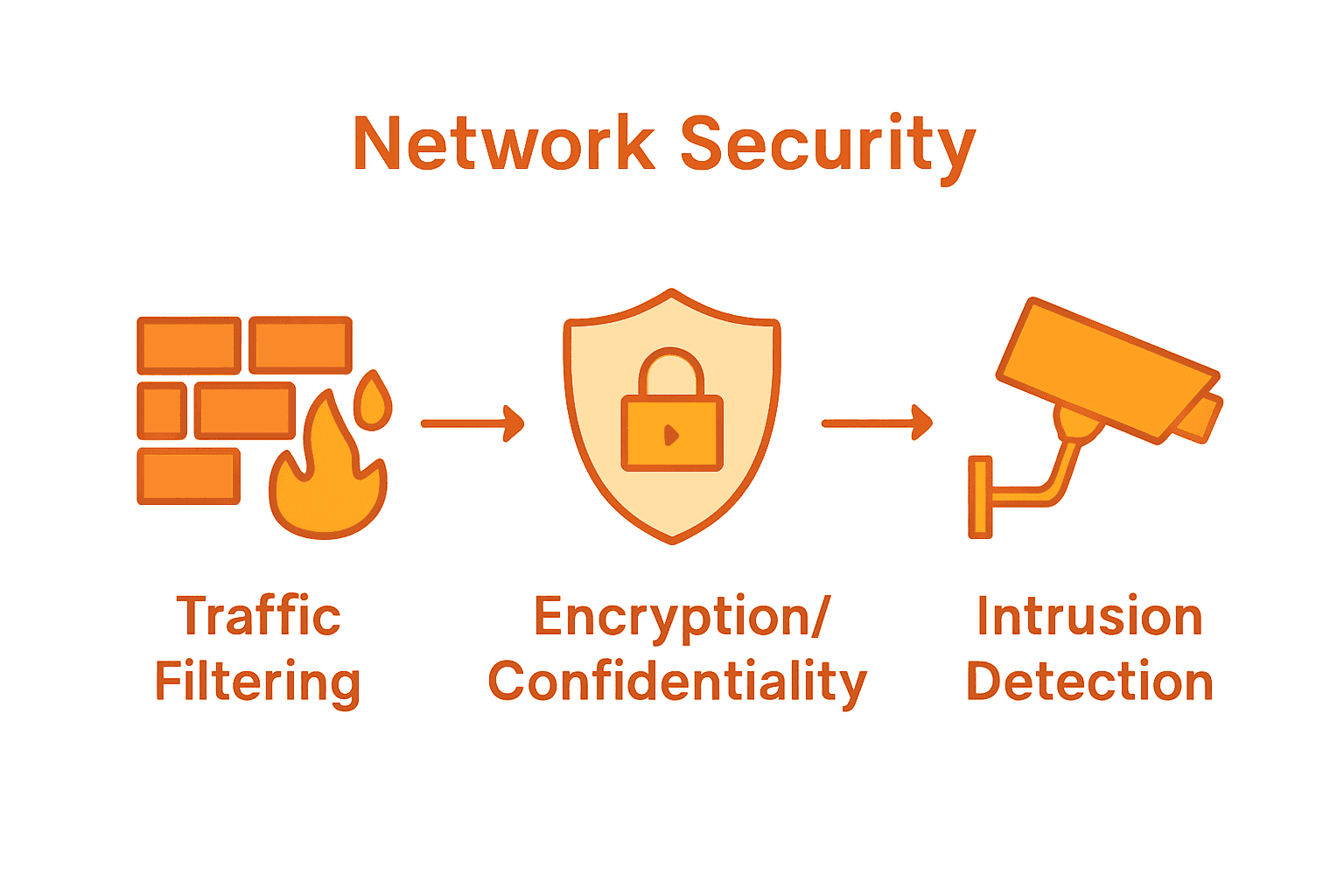
Network security is a multi-layered approach that requires diverse solutions to protect organizational digital infrastructure. According to dpsa.gov.za, critical network security solutions include firewalls and encryption technologies that monitor network traffic and secure data transmission.
Comprehensive network security encompasses several key solution types:
- Firewall Protection: Network devices that filter incoming and outgoing traffic based on predefined security rules
- Encryption Systems: Mathematical processes that encode data to ensure confidentiality and anonymity
- Access Control Mechanisms: Technologies that restrict network entry to authorized personnel
- Intrusion Detection Systems: Tools that identify and alert potential security breaches
- Virtual Private Networks (VPNs): Secure communication channels for remote connectivity
As www1.up.ac.za highlights, network security standards also extend to physical infrastructure, including secure access to network equipment and strategic network design. These comprehensive approaches ensure robust protection against evolving cyber threats.

Here’s a summary comparing key network security solutions and their primary functions:
| Solution Type | Main Function | Typical Benefit |
|---|---|---|
| Firewall Protection | Filters network traffic | Prevents unauthorised access |
| Encryption Systems | Encodes data transmissions | Ensures data confidentiality |
| Access Control Mechanisms | Restricts network entry | Limits user privilege |
| Intrusion Detection Systems | Identifies and alerts on breaches | Rapid issue response |
| Virtual Private Networks | Secures remote connections | Safe access outside the office |
 |
|
Implementing a holistic network security strategy requires understanding and integrating multiple solution types. For businesses seeking a deeper exploration of network security approaches, check out our guide on types of network security.
How Network Security Works in Business
In the digital landscape, network security is a critical operational strategy that protects businesses from sophisticated cyber threats. According to gov.za, organizations must practice safe digital habits such as using strong passwords, avoiding public Wi-Fi for sensitive transactions, and maintaining constant vigilance against suspicious communication channels.
Effective network security in business environments operates through multiple interconnected mechanisms:
- Risk Assessment: Identifying potential vulnerabilities in existing digital infrastructure
- Threat Monitoring: Continuous surveillance of network traffic and potential security breaches
- Access Control: Implementing strict authentication protocols
- Data Encryption: Protecting sensitive information during transmission
- Incident Response: Developing rapid intervention strategies for potential security events
Collaboration emerges as a fundamental principle in modern network security. Cybersecurity Hub emphasizes the importance of coordinated efforts between government organizations, private sectors, and civil society to protect critical infrastructure against cyber-attacks. This collaborative approach ensures a more robust and adaptive security ecosystem.
For businesses seeking to strengthen their network security strategies, understanding these core principles is essential. When developing a comprehensive security framework, organizations must remain proactive and adaptable. Learn more about protecting your business in our guide on network security best practices.
Implementing Network Security Effectively
Implementing robust network security requires a strategic and comprehensive approach that goes beyond basic technical solutions. According to education.gov.za, effective implementation involves protecting networks and data from unauthorized access while ensuring improved information security and business continuity management.
Key strategies for successful network security implementation include:
- Password Management: Creating strong, complex passwords that are long, random, and include multiple character types
- Multi-Factor Authentication: Implementing additional verification layers
- Regular Security Audits: Conducting comprehensive assessments of network vulnerabilities
- Employee Training: Developing awareness programs to educate staff about potential security risks
- Continuous Monitoring: Establishing real-time threat detection and response mechanisms
The broader context of network security extends beyond individual organizational efforts. As outlined by gov.za, effective implementation involves addressing national security threats in cyberspace, combating cyber warfare, and developing adaptive legal frameworks to ensure comprehensive protection.
Navigating the complex landscape of network security requires a proactive and holistic approach. For businesses looking to enhance their security strategies, how to keep your company’s network secure provides critical insights into developing a resilient and comprehensive security framework.
Risks, Threats, and Common Oversights
Network security faces an increasingly complex landscape of sophisticated cyber threats that continually evolve and challenge organizational defenses. According to presscouncil.org.za, the Cybercrimes Act reveals a comprehensive range of illicit activities, including unlawful data access, interception, system interference, and cyber fraud that pose significant risks to digital infrastructure.
Primary network security risks and vulnerabilities include:
- Unauthorized Access: Breaching network perimeters through weak authentication
- Phishing Attacks: Deceptive communications designed to steal sensitive information
- Malware Infiltration: Introducing destructive software into network systems
- Social Engineering: Manipulating human psychology to circumvent technical controls
- Insider Threats: Potential risks from within the organization itself
Government sources highlight the growing prevalence of digital fraud schemes. gov.za warns about increasing online threats such as tender scams, investment frauds, and sophisticated shopping platform deceptions that target unsuspecting organizations and individuals.
Understanding these risks requires continuous learning and proactive defense strategies. Businesses seeking comprehensive insights into navigating this complex threat landscape can explore our guide on understanding cybersecurity threats.
Strengthen Your Business with Expert Network Security Support
In today’s fast-paced digital world, the challenges of stopping cyber threats and keeping your sensitive data safe can feel overwhelming. This article highlights critical issues like unauthorized access, encryption, and continuous monitoring – all vital for protecting your business’s network. If you are a professional service firm worried about evolving risks such as phishing attacks or insider threats, you need a trusted partner who understands these complexities and can provide a tailored approach.
At Techtron, we specialise in delivering comprehensive network security solutions that reduce your technical burdens while ensuring your digital assets are protected. Our fully managed IT services include proactive security measures, employee training, and ongoing threat detection to keep your business resilient. Don’t wait for a breach to challenge your operations. Discover how we can help you implement strong network security now by visiting network security best practices and learn more about types of network security. Take control of your network’s safety and keep your business operating smoothly by contacting us today at Techtron.
Frequently Asked Questions
What is network security and why is it important?
Network security refers to the measures and protocols implemented to protect the integrity, confidentiality, and availability of computer networks and data. It is crucial for preventing unauthorized access, protecting sensitive information, and maintaining operational continuity.
What are the key types of network security solutions?
Key types of network security solutions include firewall protection, encryption systems, access control mechanisms, intrusion detection systems, and virtual private networks (VPNs). Each solution plays a specific role in safeguarding digital assets.
How does network security work in a business environment?
Network security functions in a business environment through risk assessments, continuous threat monitoring, strict access controls, data encryption, and developing incident response strategies to quickly address potential security breaches.
What are some common risks associated with network security?
Common risks include unauthorized access, phishing attacks, malware infiltration, social engineering, and insider threats. Organizations must be aware of these vulnerabilities and implement strategies to mitigate them.