

Effective Remote Team Management for IT Success
More than 60 percent of organizations face unexpected risks when their remote infrastructure goes unchecked. As remote work becomes the norm, your team’s productivity and security depend on a strong digital setup. A clear understanding of your current systems and thoughtful planning can make remote management smooth and effective. This guide breaks down practical steps to help you assess, secure, and optimize remote team operations for long-term success.
Quick Summary
| Key Point | Explanation |
|---|---|
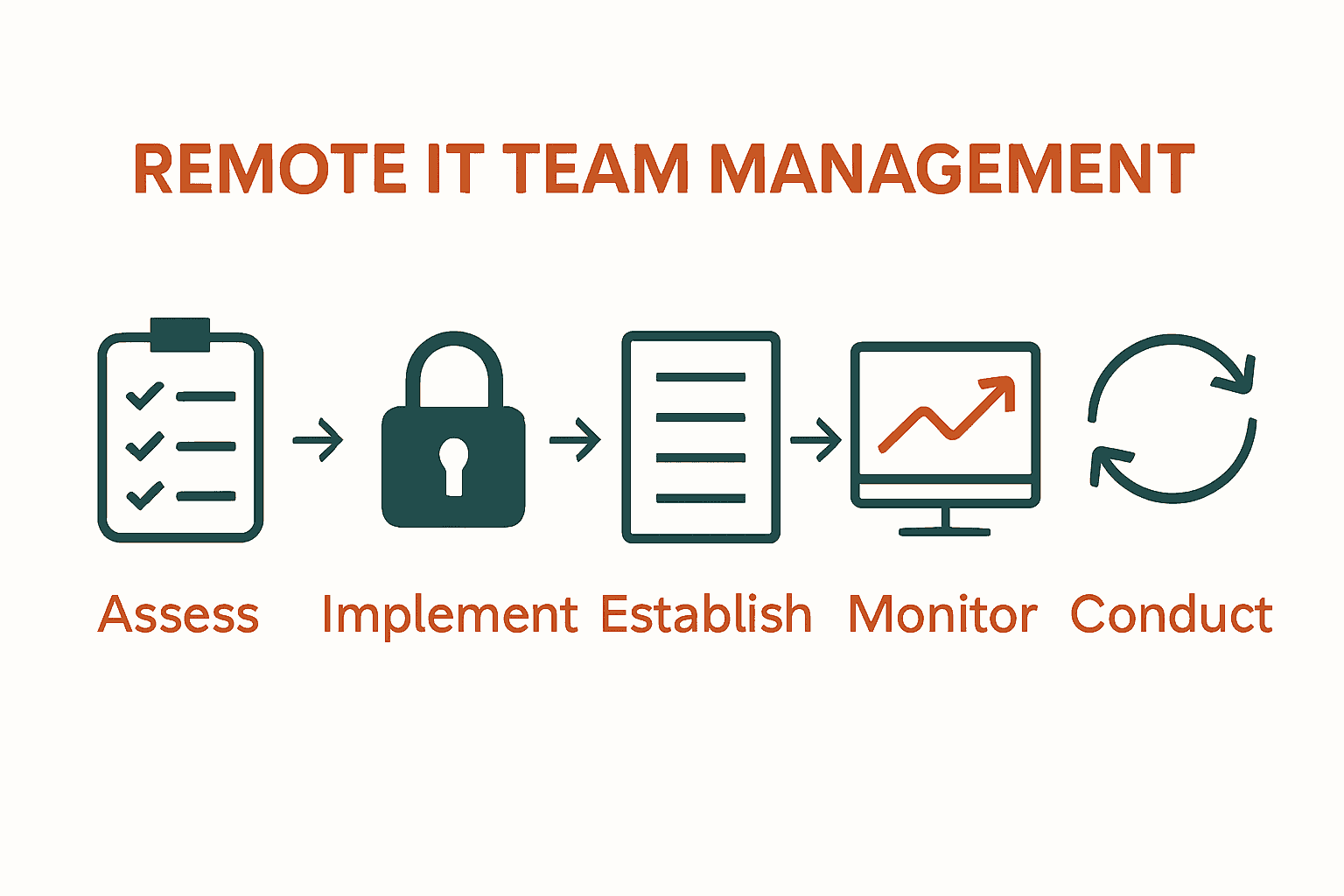
| 1. Assess current remote infrastructure | Evaluate your existing technology to identify strengths and weaknesses that affect productivity and collaboration. |
| 2. Implement secure communication tools | Choose platforms that provide end-to-end encryption and robust security features for safe remote collaboration. |
| 3. Establish clear remote work policies | Develop guidelines detailing responsibilities and expectations to enhance trust and coordination within teams. |
| 4. Monitor performance and team challenges | Use both quantitative and qualitative methods to track team dynamics and address issues proactively. |
| 5. Review outcomes regularly | Conduct periodic evaluations of remote work strategies to identify areas for improvement and adjust accordingly. |
Step 1: Assess current remote infrastructure and needs
Understanding your existing remote infrastructure sets the foundation for successful IT management. This assessment helps identify strengths, gaps, and potential improvements in your remote work capabilities.
According to the Journal of Excellence in Social Sciences Journal of Excellence in Social Sciences, robust IT infrastructure requires evaluating key components like connectivity, communication platforms, resource access, cybersecurity measures, and IT support. Start by conducting a comprehensive inventory of your current technological resources.
Begin with a systematic review of your network infrastructure. Document existing hardware such as laptops, desktops, mobile devices, and network equipment. Assess internet connectivity quality across different remote locations. Examine your current communication tools like video conferencing software, instant messaging platforms, and collaborative workspaces.
Pro Tip: Create a detailed spreadsheet tracking device specifications, access permissions, and software licenses for comprehensive visibility.
Next, evaluate your cybersecurity protocols. Review current access management systems, virtual private network (VPN) configurations, and multi factor authentication processes. Identify potential vulnerabilities and potential areas requiring immediate security upgrades. How to Manage Remote Access for Secure Business IT can provide additional guidance on securing your remote infrastructure.
The goal is not just documenting your current setup but understanding how effectively it supports your team’s productivity and collaboration needs. This assessment will inform strategic decisions about infrastructure investments and optimization.
Step 2: Implement secure communication and collaboration tools
Selecting the right communication and collaboration tools is crucial for maintaining productivity and security in remote work environments. Your goal is to choose platforms that enable seamless teamwork while protecting sensitive business information.
StartUp Magazine South Africa highlights several essential tools for remote team management. Begin by evaluating video conferencing solutions like Zoom or Google Meet for team meetings, project management platforms such as Trello for tracking workflows, and collaborative document sharing systems like Google Drive for real-time teamwork.
MailSafi emphasizes the critical importance of security features when selecting these tools. Prioritize platforms offering end-to-end encryption, multi factor authentication, and robust access controls.
 This ensures that your communication channels remain protected from potential cybersecurity threats.
Pro Tip: Always conduct a comprehensive security assessment of any collaboration tool before full implementation.
When evaluating tools, consider factors like user permissions, data encryption, compliance with industry regulations, and integration capabilities with your existing IT infrastructure. What is Secure File Sharing? can provide additional insights into maintaining secure digital collaboration.
Remember that the most advanced tool is only as effective as your team’s understanding and proper usage. Invest time in training team members on security protocols and best practices for using these collaborative platforms.
Step 3: Establish clear remote work policies and expectations
Building a successful remote work environment requires carefully crafted policies that provide clarity, structure, and mutual understanding for your entire team. Your goal is to create guidelines that support productivity while maintaining transparency and trust.
Research from ArXiv highlights the critical importance of establishing clear policies to address potential challenges in remote work coordination. The study reveals that without well defined expectations, teams can encounter significant issues like communication barriers, distrust, and coordination difficulties that directly impact overall performance.
Start by developing comprehensive documentation that covers key aspects of remote work. This should include communication protocols, availability expectations, performance measurement criteria, data security requirements, and technology usage guidelines. 6 IT Policies to Help Protect Your Company can provide additional insights into creating robust policy frameworks.
Pro Tip: Involve team members in policy development to ensure buy in and address potential real world implementation challenges.
Another crucial consideration comes from ArXiv, which emphasizes the delicate balance between intra team and inter team collaboration. Your policies should create mechanisms that facilitate both internal team interactions and broader organizational communication.
Ensure your remote work policies are living documents that can adapt to changing technological and workplace dynamics. Regular review and refinement will help maintain their relevance and effectiveness in supporting your team’s evolving needs.
Step 4: Monitor performance and address team challenges
Effective remote team management requires a proactive approach to monitoring performance and addressing challenges before they escalate. Your goal is to create a supportive environment that maintains productivity and team morale while identifying and resolving potential issues quickly.
Research from ArXiv reveals critical insights into remote team coordination, highlighting the importance of understanding and addressing challenges such as misunderstandings, help request difficulties, and potential drops in job satisfaction. Implement regular check ins and performance tracking mechanisms that go beyond traditional metrics.
Develop a comprehensive monitoring strategy that includes both quantitative and qualitative assessment methods. Use project management tools to track deliverables, but also schedule regular one on one meetings to understand individual team member experiences. 7 Essential Tips for Improving Team Productivity can provide additional guidance on effective performance monitoring.
Pro Tip: Create a safe communication channel where team members can openly share challenges without fear of negative consequences.
The ArXiv study emphasizes the delicate balance between intra team and inter team collaboration. Your monitoring approach should consider both internal team dynamics and broader organizational interactions.
Look for potential communication gaps and create mechanisms to bridge these challenges.
Remember that performance monitoring is not about micromanagement but about providing support, identifying growth opportunities, and ensuring your remote team remains connected, motivated, and aligned with organizational goals. Regular feedback, recognition, and adaptive support are key to maintaining a high performing remote team.
Step 5: Review outcomes and optimize management strategies
Successful remote team management is an ongoing process of continuous improvement. Your objective is to systematically evaluate your remote work strategies, identifying what works well and where meaningful enhancements can be made.
According to the IITPSA, the COVID-19 pandemic revealed significant opportunities for productivity and cost reduction in the ICT sector. Begin your review by conducting a comprehensive analysis of key performance indicators, including project completion rates, team productivity metrics, communication effectiveness, and overall operational efficiency.
Create a structured evaluation framework that captures both quantitative data and qualitative feedback. Use surveys, performance analytics, and direct team member interviews to gather comprehensive insights. 7 Innovative Team Building Ideas for IT Leaders can provide additional perspectives on collecting meaningful team performance data.
Pro Tip: Implement a quarterly review process that allows for agile adjustments to your remote work strategies.
Research from Wits University highlights unexpected benefits of remote work, emphasizing the importance of looking beyond traditional performance measurements. Consider factors such as employee satisfaction, work life balance, and individual team member growth alongside standard productivity metrics.
Remember that optimization is not a one time event but a continuous journey. Stay flexible, be open to experimenting with new approaches, and maintain a collaborative environment that encourages ongoing feedback and innovation.
Strengthen Your Remote Team Management with Expert IT Support
Managing remote teams comes with unique challenges like ensuring secure communication, maintaining productivity, and protecting sensitive data. Your goal to build a seamless remote work environment with clear policies and robust infrastructure can feel overwhelming without the right IT partner. Techtron understands how critical it is to have fully managed IT services that safeguard your business while supporting smooth collaboration and secure access.
Take control of your remote team’s success now with tailored solutions including cybersecurity, cloud integration, and proactive IT management designed for professional services firms. Discover how our managed IT services can help you address gaps in infrastructure, enforce security protocols, and optimize team performance. Ready to simplify your IT and empower your remote workforce? Visit Techtron and start transforming your remote team management today.
Frequently Asked Questions
How can I assess my current remote infrastructure for effective team management?
To assess your current remote infrastructure, start by reviewing your network hardware, internet connectivity, and communication tools. Create a detailed inventory and document any gaps or weaknesses in your existing setup within the next 30 days.
What are the essential communication and collaboration tools for remote teams?
Essential tools for remote teams include video conferencing platforms, project management software, and collaborative document sharing systems. Prioritize security features such as end-to-end encryption when selecting these tools, and implement them within 60 days.
What should be included in my remote work policies to promote productivity?
Your remote work policies should outline communication protocols, performance measurement criteria, and technology usage guidelines. Involve team members in the development process and review these policies quarterly to ensure they remain effective.
How can I monitor remote team performance effectively?
To monitor remote team performance, combine quantitative metrics with regular one-on-one check-ins to understand team member experiences. Establish a monitoring strategy that identifies challenges and is reviewed on a monthly basis for actionable insights.
What steps should I take to optimize my remote management strategies?
Begin by conducting regular evaluations of key performance indicators and collecting qualitative feedback from team members. Implement a quarterly review process to allow for adjustments and improvements based on both productivity metrics and employee satisfaction.
How can I ensure strong cybersecurity in my remote work environment?
Ensure strong cybersecurity by regularly reviewing your access management systems, VPN configurations, and multi-factor authentication processes. Conduct a comprehensive security assessment of all tools used by your team at least every six months.