

Modern Office Design Trends: Complete Guide 2024
Over half of employees feel that their workspace directly impacts their productivity and job satisfaction. Today, office design does more than set a visual tone. It shapes how teams connect, fuels creativity, and even supports mental and physical wellbeing. As green-certified buildings and smart technologies gain momentum, understanding the latest trends in modern office design can help organizations create spaces that foster happier, healthier, and more productive teams.
Key Takeaways
| Point | Details |
|---|---|
| Modern workspace design | Emphasizes flexibility, technology integration, and sustainability to enhance employee wellbeing and productivity. |
| Design styles shift | Promotes open-plan, activity-based working, and resimercial design to support collaboration and creativity. |
| Technology as a foundation | Smart office solutions enhance workspace adaptability, enabling seamless integration of remote and hybrid work models. |
| Prioritize employee involvement | Successful office redesign requires incorporating employee feedback to create functional environments that meet diverse work needs. |
Defining Modern Office Design Trends
Modern office design has transformed dramatically from traditional cubicle landscapes to dynamic, adaptive environments that prioritize employee wellbeing and productivity. According to Green Building Council of South Africa, contemporary workspaces are increasingly embracing green-certified designs that emphasize energy efficiency and healthier work environments.
Workplace Evolution is no longer just about aesthetics – it represents a strategic approach to creating spaces that support collaboration, creativity, and employee engagement. The modern office goes beyond physical infrastructure, integrating technology, flexibility, and human-centric design principles that recognize workers as the most valuable organizational asset.
Key characteristics of contemporary office design include:
- Flexible Workspace Configurations: Areas that can be quickly reconfigured for different tasks and team sizes
- Biophilic Design Elements: Incorporating natural light, indoor plants, and organic materials to reduce stress and improve mental wellbeing
- Technology Integration: Seamless digital infrastructure supporting hybrid and remote work models
- Sustainability Focus: Energy-efficient systems and materials that minimize environmental impact
These design trends reflect a profound understanding that physical workspace directly influences organizational culture, employee productivity, and overall business performance.
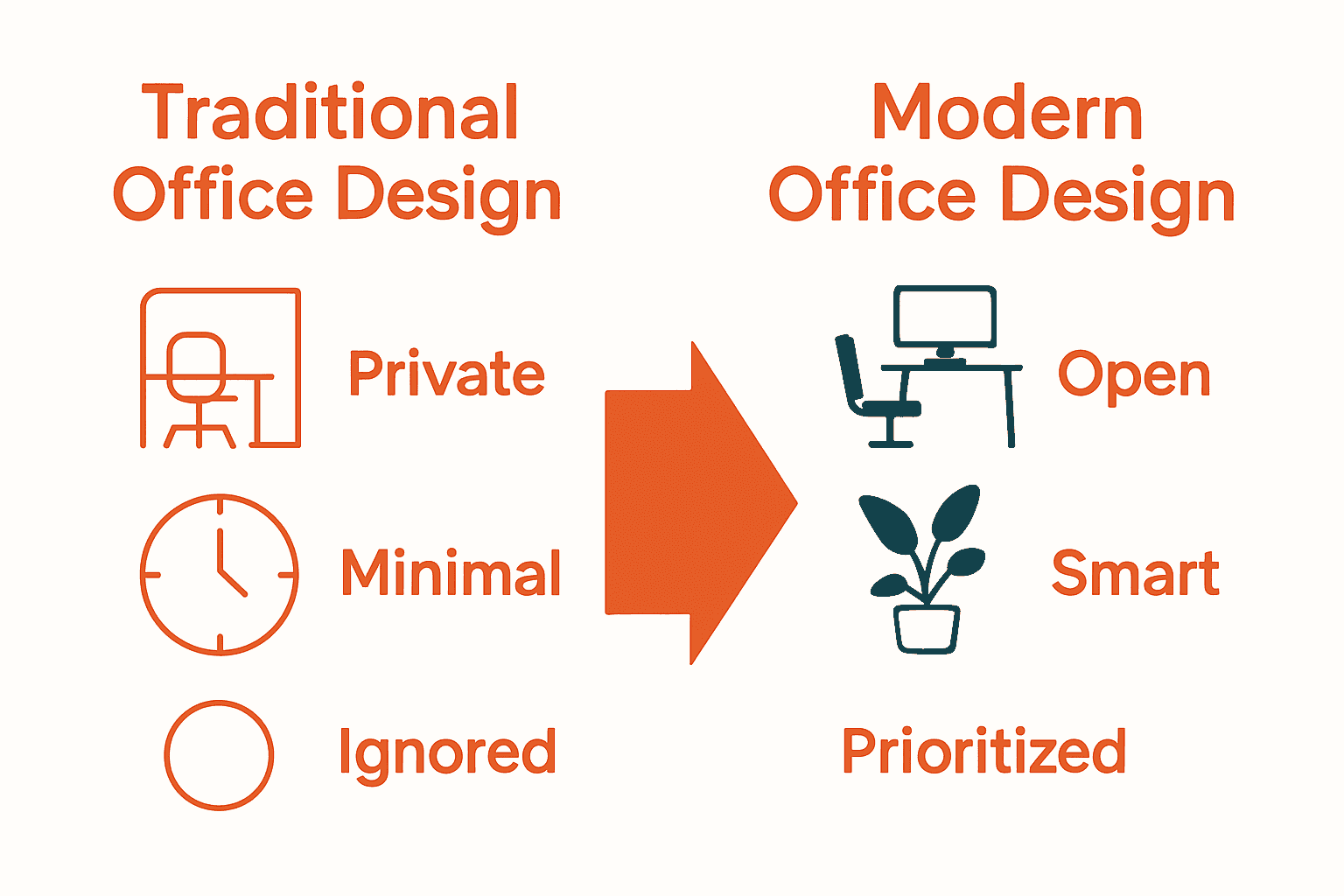 Modern Workplace Tech: Smarter Business Tools demonstrates how strategic office design can become a powerful tool for attracting talent and driving innovation.
Popular Design Styles and Layouts
Contemporary office design has evolved far beyond traditional layouts, with organizations reimagining workspaces to foster creativity, collaboration, and employee wellbeing. According to University of Pretoria, there is a significant shift towards open-plan layouts that balance aesthetics and functionality, creating dynamic environments that adapt to changing workplace needs.
Design Approaches now prioritize flexibility and human-centric experiences. Several prominent design styles have emerged, each offering unique benefits for modern organizations:
- Activity-Based Working (ABW): Zones designed for specific tasks, allowing employees to choose environments that suit their current work requirements
- Open-Plan Layouts: Removing physical barriers to encourage spontaneous communication and team collaboration
- Hybrid Workspaces: Combining private areas with shared collaborative zones
- Resimercial Design: Blending residential comfort with professional functionality
Color and material selection play a crucial role in creating engaging workspaces. Rocky Mountain College of Art + Design highlights the growing trend of using earthy greens and natural tones to create calming, productive environments. These design choices go beyond aesthetics – they directly impact employee mood, creativity, and overall workplace satisfaction.
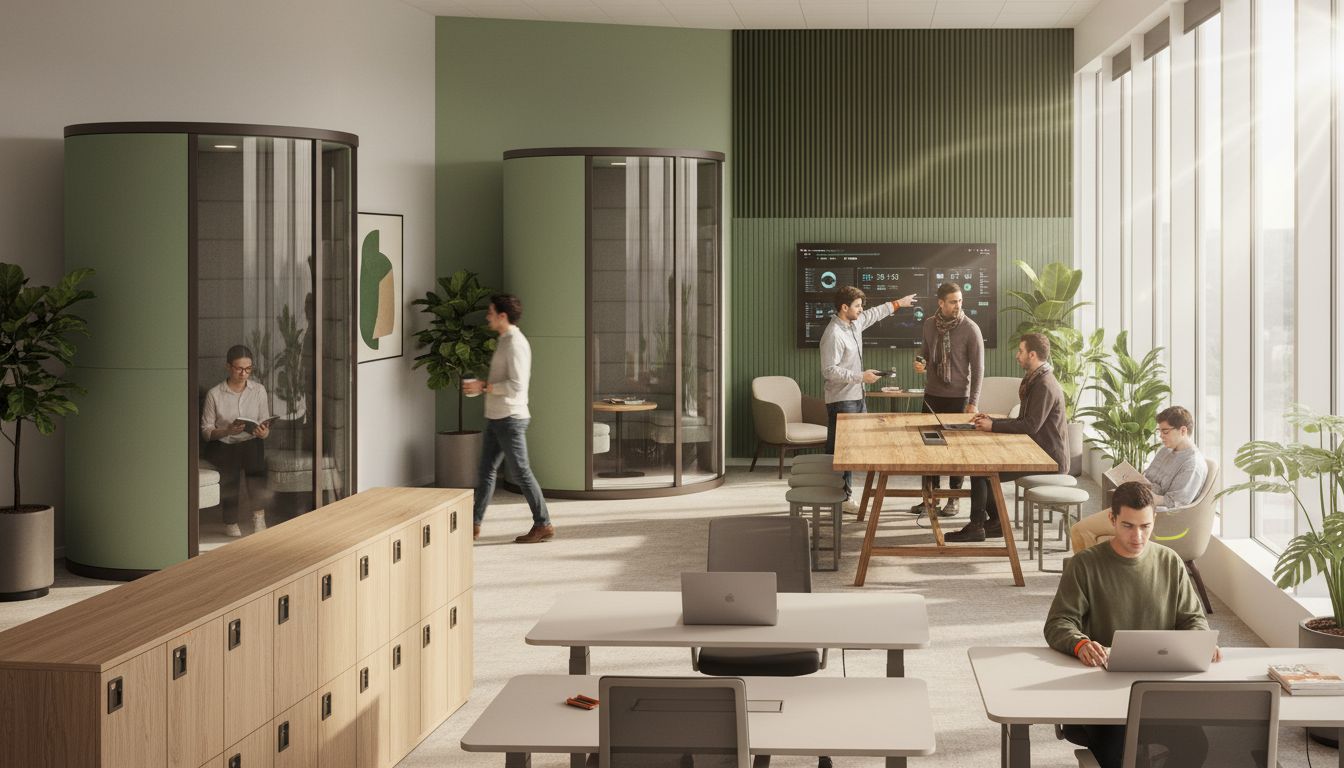
By thoughtfully designing office spaces that reflect organizational culture and employee needs, businesses can transform their physical environment into a strategic asset that drives innovation, collaboration, and productivity.
Technology Integration in Workspaces
Technology has become the cornerstone of modern workplace design, transforming traditional office environments into intelligent, responsive ecosystems. According to Rocky Mountain College of Art + Design, advanced technologies like virtual collaboration tools and smart office systems are revolutionizing how organizations support remote and hybrid work models.
Smart Office Technologies are rapidly evolving to create more adaptive and efficient workspaces. Key technological integrations include:
- IoT-Enabled Infrastructure: Sensors that monitor occupancy, temperature, and lighting
- Advanced Collaboration Platforms: Real-time digital workspaces supporting global team interactions
- Artificial Intelligence: Smart systems that optimize workspace utilization and employee comfort
- Wireless Connectivity: Seamless network access across multiple device types
The South African Journal of Industrial Engineering highlights how Industry 4.0 technologies are creating more agile and responsive office environments. This technological integration goes beyond mere convenience – it represents a fundamental reimagining of how work happens, breaking down physical and geographical barriers.
Future of Workplace Technology: Complete Guide demonstrates that successful technology integration is about more than installing new tools. It requires a holistic approach that considers employee experience, organizational culture, and the evolving nature of work itself.
Employee Wellbeing and Sustainability
Modern workplaces are increasingly recognizing the profound connection between environmental design and employee health. According to the Green Building Council of South Africa, green-certified offices offer significant benefits by enhancing employee wellbeing through improved air quality and natural lighting, creating environments that support both physical and mental health.
Holistic Workplace Design has emerged as a critical strategy for supporting employee wellness. Key elements include:
- Biophilic Design: Integrating natural elements to reduce stress and improve cognitive function
- Ergonomic Workstations: Supporting physical health through thoughtfully designed furniture and spaces
- Mental Health Support: Creating environments that promote psychological safety and emotional wellbeing
- Sustainable Practices: Reducing environmental impact while creating healthier work environments
Rocky Mountain College of Art + Design emphasizes the importance of biophilic design elements, such as indoor plants and natural materials, in promoting employee health and productivity. These approaches go beyond aesthetic considerations, representing a fundamental shift in understanding workplace design as a critical tool for employee engagement and organizational success.
7 Practical Ways to Support Mental Health in the Workplace demonstrates that sustainable workplace design is not just about physical infrastructure, but about creating holistic environments that support the complete well-being of employees.
Space Efficiency and Regulatory Compliance
Modern organizations are facing increasingly complex challenges in designing workspaces that balance operational efficiency with stringent regulatory requirements. According to the University of Pretoria, strategic approaches to optimizing office space utilization must carefully consider South African building regulations while maintaining workplace productivity.
Adaptive Space Management has emerged as a critical strategy for navigating these complex requirements. Key considerations include:
- Flexible Workspace Configurations: Designing multipurpose areas that can rapidly transform
- Occupancy Tracking: Implementing smart systems to monitor and optimize space usage
- Compliance Mapping: Ensuring design meets health, safety, and accessibility standards
- Dynamic Zoning: Creating adaptable spaces that support different work modes
The South African Journal of Industrial Engineering highlights the importance of integrating flexible workspaces to maximize space efficiency while complying with evolving workplace standards. This approach goes beyond mere spatial optimization, representing a holistic strategy that considers legal requirements, employee needs, and organizational performance.
Understanding IT Compliance Requirements for Businesses demonstrates that successful space design is not just about physical layout, but about creating environments that seamlessly integrate regulatory compliance with operational excellence.
Mistakes to Avoid in Office Redesign
Office redesign represents a significant investment that can dramatically impact organizational productivity and employee satisfaction. According to Rocky Mountain College of Art + Design, one of the most critical mistakes organizations make is neglecting employee input and failing to incorporate adaptable design elements that support diverse work styles.
Strategic Redesign Considerations highlight several common pitfalls that businesses must carefully navigate:
- Ignoring Employee Feedback: Designing spaces without consulting those who will actually use them
- Prioritizing Aesthetics Over Functionality: Creating visually impressive spaces that don’t support practical work needs
- Inflexible Design Choices: Creating static environments that cannot adapt to changing organizational requirements
- Budget Misallocation: Overspending on trendy elements at the expense of core functional needs
The New York Institute of Art and Design warns against overusing trendy design elements that may quickly become outdated, emphasizing the importance of timeless design choices that balance contemporary aesthetics with long-term practicality. Successful office redesign requires a holistic approach that considers organizational culture, employee needs, and future scalability.
4 Common IT Mistakes Small Companies Make demonstrates that redesign is not just about physical transformation, but about creating environments that support strategic business objectives and employee performance.
Transform Your Modern Office Design with Expert IT Support
Modern office design is about more than aesthetics. It is about creating flexible, technology-driven spaces that boost employee wellbeing, collaboration and productivity. This article highlights key challenges such as integrating smart technology, ensuring regulatory compliance and supporting hybrid work models. These evolving office demands require IT solutions that always stay ahead of the curve to keep your workspace secure, efficient and adaptable.
At Techtron we specialise in managing the IT infrastructure that powers modern workplaces. Our services include seamless cloud integrations like Microsoft 365 and Azure, proactive cybersecurity and tailored IT management. By partnering with us you reduce the complexity of technology so your team can focus on innovation and growth. Discover how our solutions help you overcome IT challenges linked to future workplace technology and maintain compliance with IT requirements for businesses.
Don’t let outdated IT hold back your modern office transformation. Visit Techtron now to secure smart, scalable and compliant IT support designed specifically for your evolving workspace needs.
Frequently Asked Questions
What are the key characteristics of modern office design?
Modern office design emphasizes flexible workspace configurations, biophilic design elements, technology integration, and a focus on sustainability to enhance employee wellbeing and productivity.
How does technology integration impact modern office design?
Technology integration transforms offices into intelligent ecosystems, enabling smart office technologies like IoT-enabled infrastructure, advanced collaboration platforms, and AI systems that optimize workspace utilization and support hybrid work models.
Why is employee wellbeing important in office design?
Employee wellbeing is crucial in office design as it directly influences mental health, productivity, and overall job satisfaction. Design elements like biophilic features and ergonomic workstations contribute to creating healthier work environments.
What mistakes should organizations avoid in office redesign?
Organizations should avoid neglecting employee feedback, prioritizing aesthetics over functionality, creating inflexible designs, and misallocating budgets to ensure that office redesign supports both practical work needs and organizational culture.