

Benefits of IT Automation for South African Firms
Over 60 percent of South African businesses are turning to IT automation to drive productivity and cut costs. In a competitive market pressured by rapid change, efficient technology adoption is no longer just an option. Understanding how IT automation transforms workflow, reduces errors, and reallocates resources is vital for any South African organisation seeking a sustainable edge in today’s evolving business landscape.
Key Takeaways
| Point | Details |
|---|---|
| IT Automation Enhances Efficiency | South African businesses can streamline operations by adopting IT automation, significantly reducing manual tasks and administrative costs. |
| Diverse Applications Across Sectors | Industries such as finance and manufacturing utilise automation for tasks like transaction processing and quality control, improving overall productivity. |
| Cost Reduction and Resource Allocation | Implementing automation enables companies to lower operational costs and reallocate staff towards strategic roles, boosting organisational effectiveness. |
| Need for Risk Management | Effective automation requires a proactive approach to manage risks, including workforce training and cybersecurity measures, ensuring seamless integration and compliance. |
Defining IT Automation in South Africa
Information Technology (IT) automation represents a strategic approach to streamlining business processes through advanced technological solutions. At its core, automation involves replacing manual, repetitive tasks with intelligent software systems and robotic processes that operate with minimal human intervention. For South African businesses, this translates into a powerful mechanism for enhancing operational efficiency and reducing administrative overhead.
The landscape of IT automation in South Africa is rapidly evolving, particularly within sectors like pharmaceuticals and financial services. Research examining ICT and robotic automation systems reveals a growing trend of organisations leveraging technological solutions to optimise workflows. These systems range from simple task scheduling algorithms to complex artificial intelligence platforms capable of making nuanced operational decisions.
Key components of IT automation typically include:
- Process Automation: Standardising repetitive administrative tasks
- Infrastructure Management: Automated system configuration and monitoring
- Workflow Optimisation: Intelligent routing of tasks and resources
- Predictive Maintenance: Using data analytics to anticipate and prevent technological failures
By implementing comprehensive IT automation strategies, South African firms can achieve significant competitive advantages. The technology enables businesses to reallocate human resources towards more strategic, value-adding activities while simultaneously reducing operational costs and minimising human error. As digital transformation accelerates, organisations that embrace automation will be better positioned to adapt to rapidly changing technological landscapes.
Key Forms and Use Cases in Business
IT automation manifests in diverse forms across various business sectors, each tailored to address specific operational challenges. Research examining ICT and robotic automation systems highlights how different industries leverage technological solutions to streamline complex workflows and enhance productivity.
In the financial services sector, automation takes shape through intelligent transaction processing, risk assessment algorithms, and automated compliance monitoring. Banking institutions increasingly deploy robotic process automation (RPA) to handle repetitive tasks like customer data entry, account reconciliation, and fraud detection. These systems can process thousands of transactions with greater accuracy and speed compared to manual human intervention.
Key Use Cases of Business IT Automation Include:
- Customer Service Automation
- Chatbot interactions
- Automated ticket routing
- Self-service portals
- Financial Operations
- Automated invoicing
- Payroll processing
- Expense management
- Human Resources
- Recruitment screening
- Employee onboarding workflows
- Performance tracking systems
- Supply Chain Management
- Inventory tracking
- Procurement automation
- Logistics coordination
Manufacturing and pharmaceutical industries demonstrate particularly sophisticated automation applications. Robotic systems can now manage intricate production processes, conduct quality control checks, and generate real-time performance analytics. These technologies not only reduce human error but also enable businesses to scale operations rapidly while maintaining consistent quality standards.

Process Improvements and Operational Gains
IT automation delivers transformative operational improvements that fundamentally reshape how businesses manage their core processes. Research examining productivity in the automotive assembly sector demonstrates significant enhancements in labour productivity through strategic technological interventions.
Operational Efficiency emerges as the most compelling advantage of IT automation. By systematically reducing manual interventions, organisations can streamline complex workflows, minimise human error, and accelerate task completion rates. Studies on ICT and robotic automation systems reveal substantial improvements in cost reduction, inventory management, and overall employee efficiency.
Key Process Improvement Metrics Include:
- Time Savings
- Reduced processing times
- Elimination of redundant tasks
- Accelerated workflow sequences
- Cost Reduction
- Lower labour expenses
- Minimised operational overhead
- Optimised resource allocation
- Error Mitigation
- Consistent task execution
- Reduced human error probability
- Enhanced data accuracy
- Performance Tracking
- Real-time performance monitoring
- Detailed analytics generation
- Continuous process improvement mechanisms
The strategic implementation of IT automation enables South African businesses to compete more effectively in a rapidly evolving global marketplace. By transforming operational processes, companies can redirect human capital towards more strategic, creative, and value-generating activities, ultimately driving sustainable competitive advantages.
Cost Savings and Resource Optimisation
Cost reduction represents a critical strategic advantage of IT automation for South African businesses. Research on ICT and robotic automation systems demonstrates substantial financial benefits through intelligent resource allocation and operational streamlining.
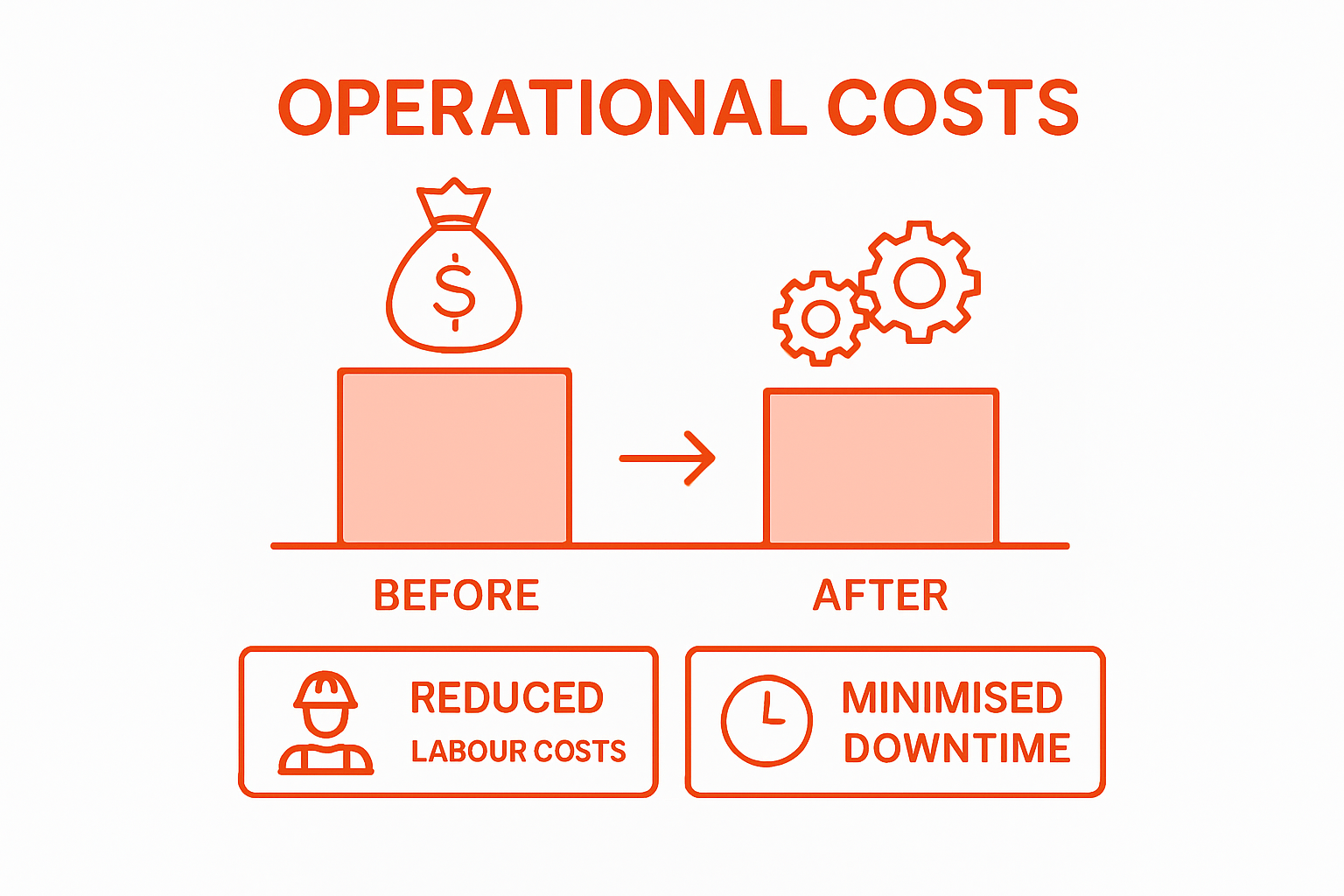
The economic impact of automation extends far beyond simple expense reduction. By systematically replacing manual processes with intelligent technological solutions, organisations can dramatically transform their cost structures. Automated systems enable businesses to reallocate human capital from repetitive administrative tasks to high-value strategic activities, creating a multiplicative effect on organisational productivity and financial performance.
Key Cost Optimization Strategies Include:
- Labour Efficiency
- Reduce manual workforce requirements
- Minimize overtime expenses
- Optimize human resource allocation
- Operational Expenditure
- Lower infrastructure maintenance costs
- Reduce energy consumption
- Minimize equipment downtime
- Technology Investment
- Predictive maintenance scheduling
- Efficient resource utilization
- Scalable technology deployment
- Risk Mitigation
- Reduce compliance-related expenses
- Minimize human error costs
- Standardize operational processes
By embracing IT automation, South African firms can create a competitive economic model that prioritizes efficiency, innovation, and strategic resource management. The cumulative financial benefits extend beyond immediate cost savings, positioning businesses to respond more dynamically to market changes and technological advancements.
Automation Risks and Best Practice Safeguards
Technology transformation demands careful risk management strategies. Research examining automation implications in South African automotive assembly highlights the critical need for comprehensive communication and strategic workforce adaptation when implementing automated systems.
While IT automation offers significant operational benefits, organisations must proactively address potential risks. The primary challenges include workforce displacement, technological integration complexities, cybersecurity vulnerabilities, and the potential for systemic failures if implementation is not carefully managed. Successful automation requires a holistic approach that balances technological advancement with human expertise and organisational resilience.
Key Risk Mitigation Strategies Include:
- Workforce Management
- Comprehensive staff retraining
- Clear communication protocols
- Gradual implementation approaches
- Technological Safeguards
- Robust cybersecurity frameworks
- Regular system vulnerability assessments
- Redundancy and failsafe mechanisms
- Compliance Considerations
- Alignment with industry regulations
- Data protection protocols
- Ethical automation guidelines
- Continuous Learning
- Regular technology audits
- Skills development programmes
- Adaptive implementation strategies
By adopting a strategic and measured approach to IT automation, South African businesses can minimise potential risks while maximising technological benefits. The key lies in viewing automation not as a replacement for human talent, but as a powerful tool that enhances organisational capabilities and empowers employees to focus on more complex, value-generating activities.
Unlock the Full Benefits of IT Automation with Expert Support from Techtron
The article highlights the transformative power of IT automation in enhancing operational efficiency while reducing costs and human error within South African firms. Businesses often face challenges like complex workflow management, cybersecurity risks, and the need for seamless integration of automated systems with existing infrastructure. Key pain points include the pressure to maintain compliance, optimise resource allocation, and safeguard against technological disruptions.
At Techtron, we understand these challenges and offer tailored IT solutions designed to support your automation journey. Our fully managed and co-managed services provide proactive infrastructure management that ensures your automation technologies operate smoothly and securely. From cybersecurity services that protect your digital assets to reliable backup and disaster recovery strategies, we help you reduce technical burdens so you can focus on scaling your business confidently.
Ready to experience the measurable benefits of IT automation for your company? Don’t wait for costly delays or security risks to impact your operations. Visit Techtron today and discover how our expert IT support can empower your business to achieve operational excellence and sustainable growth.
Frequently Asked Questions
What is IT automation?
IT automation refers to the use of technology to execute repetitive tasks automatically, reducing the need for human intervention and streamlining business processes.
How can IT automation benefit South African businesses?
IT automation can enhance operational efficiency, reduce administrative costs, minimize human error, and enable companies to reallocate human resources to more strategic tasks.
What are some key use cases of IT automation in businesses?
Key use cases include customer service automation with chatbots, automated financial operations like invoicing and payroll processing, human resources automation for recruitment and onboarding, and supply chain management automation.
What risks are associated with implementing IT automation?
Potential risks include workforce displacement, integration complexities, cybersecurity vulnerabilities, and the possibility of systemic failures if not managed properly. It’s important to implement risk mitigation strategies to address these challenges.