

Common Network Vulnerabilities – Impact on Business Security
More than 80 percent of South African businesses identify cyber threats as a major risk to their operations. With digital networks now powering nearly every aspect of business, even a minor vulnerability can lead to costly downtime or data breaches. Understanding what makes a system vulnerable is crucial for any organisation looking to protect sensitive assets, maintain trust, and stay one step ahead of evolving security challenges.
Key Takeaways
| Point | Details |
|---|---|
| Understanding Network Vulnerabilities | Network vulnerabilities are not just technical issues but strategic risks that can severely affect organisational performance. Businesses must identify and assess these vulnerabilities proactively. |
| Categories of Vulnerabilities | Key vulnerability types include software issues, hardware weaknesses, human-factor risks, and configuration management challenges. These categories need thorough analysis for effective risk management. |
| Adopting a Comprehensive Cybersecurity Strategy | Organisations should develop comprehensive cybersecurity frameworks, combining technology, continuous training, and incident response to strengthen defences against evolving threats. |
| Dynamic Threat Response | A multi-layered security approach is essential, employing real-time monitoring and adaptive mechanisms to deal with complex and evolving network threats effectively. |
Defining Network Vulnerabilities in Business Context
Network vulnerabilities represent critical weaknesses within an organisation’s digital infrastructure that can potentially compromise security, data integrity, and operational continuity. These systemic gaps emerge from various technological, human, and procedural factors that create opportunities for malicious actors to infiltrate or disrupt network systems. Understanding these vulnerabilities becomes paramount for businesses seeking to protect their digital assets and maintain robust cybersecurity defences.
In the contemporary business landscape, network vulnerabilities are not simply technical problems but strategic risks that can significantly impact organisational performance. Network vulnerability analysis processes emphasise the critical need for proactive identification and evaluation of potential security loopholes before they can be exploited by cyber threats. These vulnerabilities can manifest through multiple channels – including outdated software, misconfigured network settings, weak authentication protocols, unpatched systems, and human error.
The complexity of modern network environments demands a context-driven approach to understanding vulnerabilities. Research highlights the importance of developing resilient system functionality that anticipates and mitigates potential security risks. Key vulnerability categories include software vulnerabilities, network infrastructure weaknesses, human-factor risks, and configuration management challenges. Businesses must adopt a holistic perspective that integrates technological solutions with strategic risk management practices.
The following table summarises the main types of network vulnerabilities and their potential business consequences:
| Vulnerability Type | Description | Business Impact |
|---|---|---|
| Software Vulnerabilities | Security gaps due to unpatched or flawed code | Data breaches, operational disruption |
| Hardware Weaknesses | Insecure devices or legacy components | Downtime, service compromise |
| Human-factor Risks | Employee errors or manipulation | Credential theft, unauthorised access |
| Configuration Challenges | Misconfigured systems or weak settings | Increased attack surface, compliance risk |
Pro Business Security Tip: Conduct regular comprehensive vulnerability assessments using both automated scanning tools and manual expert review to systematically identify and prioritise potential network security risks before they can be exploited by malicious actors.
Major Types of Network Vulnerabilities
Network vulnerabilities manifest in multiple complex forms, each presenting unique challenges for organisational cybersecurity strategies. Common network attack methodologies reveal that these vulnerabilities are not merely technical weaknesses but sophisticated entry points that malicious actors systematically exploit. Understanding these vulnerabilities requires a nuanced approach that recognises the interconnected nature of digital infrastructure risks.
The primary categories of network vulnerabilities include software vulnerabilities, hardware configuration weaknesses, human-factor risks, and network protocol exploitation. Software vulnerabilities emerge from unpatched systems, outdated applications, and inherent coding flaws that create potential security gaps. Hardware vulnerabilities often stem from misconfigured network devices, inadequate access controls, and legacy infrastructure components that lack modern security protocols. Human-factor vulnerabilities represent perhaps the most unpredictable risk, involving potential social engineering attacks, weak password practices, and insufficient security awareness among personnel.

Research indicates that network threats continuously evolve, requiring organisations to adopt dynamic threat detection and intrusion prevention strategies. Sophisticated attackers leverage complex attack vectors that combine multiple vulnerability types, making traditional linear security models increasingly obsolete. Network infrastructures must now implement multi-layered defence mechanisms that can anticipate, detect, and rapidly respond to emerging threat landscapes.
Pro Security Strategy Tip: Implement a comprehensive vulnerability management programme that combines automated scanning tools, regular security audits, continuous staff training, and proactive threat intelligence monitoring to create a resilient and adaptive network defence ecosystem.
Common Attack Methods Targeting Networks
Network attack methodologies represent sophisticated digital strategies designed to exploit vulnerabilities and compromise organisational infrastructure. Advanced adversarial reconnaissance techniques reveal that modern cyber attackers employ increasingly complex and nuanced approaches to penetrate network defences, systematically gathering intelligence and identifying potential entry points before launching targeted intrusions.
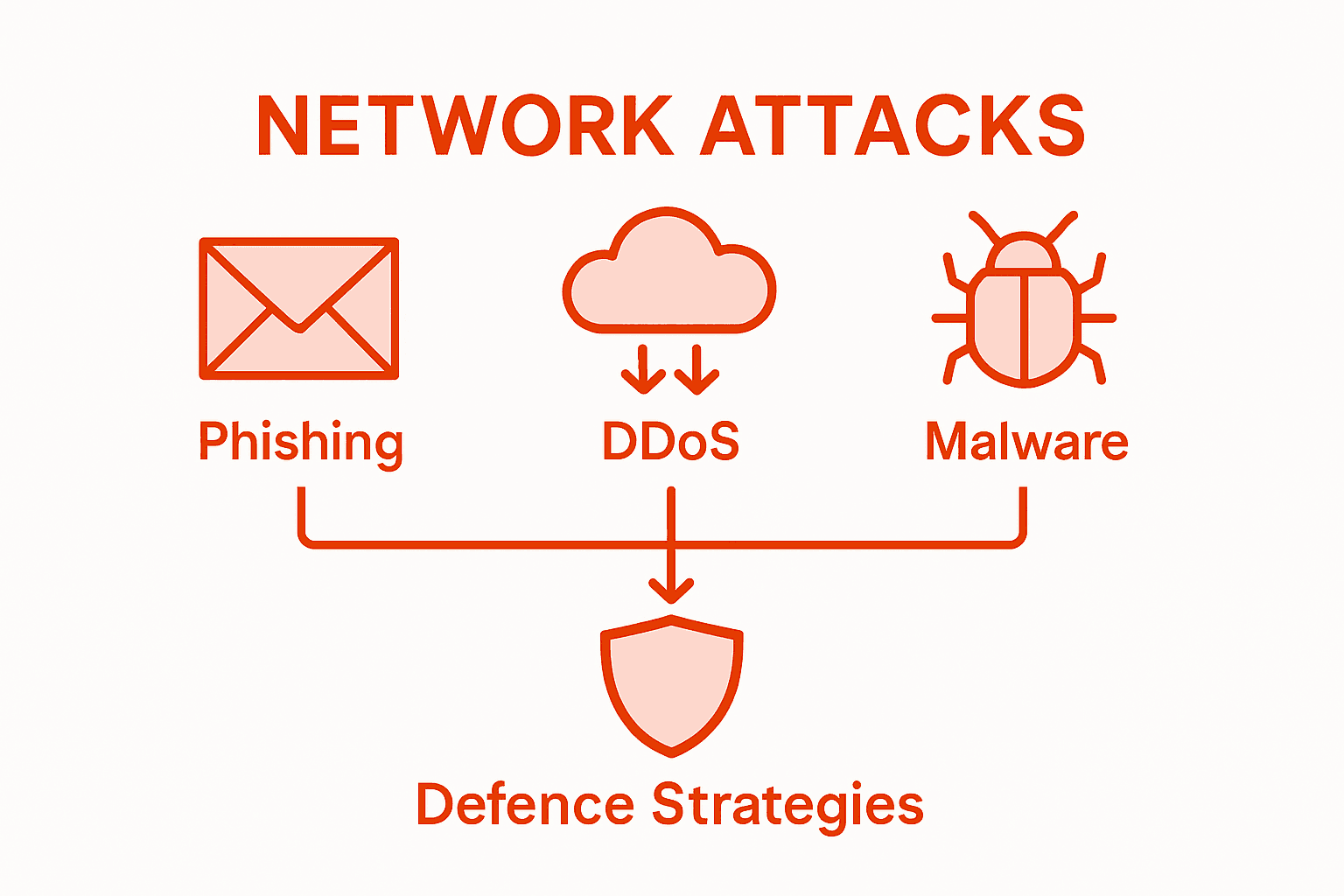
The primary attack methods targeting network infrastructure include phishing attacks, distributed denial-of-service (DDoS) attacks, man-in-the-middle infiltrations, and social engineering exploits. Phishing attacks manipulate human psychology by creating deceptive communication channels that trick employees into revealing sensitive credentials or installing malicious software. DDoS attacks overwhelm network resources by flooding systems with massive volumes of traffic, effectively rendering critical services inaccessible. Man-in-the-middle attacks intercept communication between networked devices, enabling attackers to eavesdrop, modify data transmissions, or impersonate legitimate network participants.
Cyber threats targeting interconnected technological ecosystems have become increasingly sophisticated, particularly with the proliferation of Internet of Things (IoT) devices. Smart infrastructures now face unprecedented vulnerability landscapes where multiple entry points create complex attack surfaces. Attackers leverage sophisticated tools that can simultaneously probe multiple network layers, exploiting configuration weaknesses, unpatched software vulnerabilities, and human error to create comprehensive breach strategies.
Here is a comparison of common network attack methods and typical strategies to defend against them:
| Attack Method | How It Works | Core Defence Strategy |
|---|---|---|
| Phishing | Tricking users to disclose info | Continuous staff awareness training |
| DDoS | Overloading network resources | Traffic filtering and redundant systems |
| Man-in-the-middle | Intercepting communications | Encrypted data channels and authentication |
| Social Engineering | Manipulating human behaviour | Strong access controls and monitoring |
Pro Network Defence Tip: Implement a multi-layered security approach that combines real-time threat monitoring, continuous staff training, robust access controls, and adaptive defence mechanisms to create a resilient network protection ecosystem.
Risks for South African Organisations
Cybersecurity challenges in South Africa represent a critical national economic vulnerability, with organisations facing increasingly sophisticated digital threats that target multiple sectors. South African businesses encounter a unique risk landscape characterised by rapid technological adoption, limited cybersecurity infrastructure, and emerging digital transformation strategies that often outpace defensive capabilities.
The primary cyber risks confronting South African organisations include financial services vulnerabilities, data protection challenges, and infrastructure penetration threats. Financial institutions remain particularly exposed, with cybercriminals exploiting legacy banking systems and inadequate network segmentation. Network vulnerability analysis demonstrates that many organisations lack comprehensive security frameworks, creating systemic weaknesses that enable large-scale data breaches and financial fraud. Emerging technologies like cloud computing and Internet of Things (IoT) devices further complicate the security landscape by introducing multiple potential entry points for malicious actors.
South African organisations must recognise that cybersecurity is no longer a technical problem but a strategic business risk. The proliferation of remote work, increased digital service delivery, and complex technological ecosystems have dramatically expanded potential attack surfaces. Sophisticated Software-Defined Networking strategies offer potential mitigation approaches, enabling more dynamic and responsive security infrastructure that can adapt to evolving threat landscapes.
Pro Cybersecurity Strategy Tip: Develop a comprehensive cyber resilience programme that combines technological solutions, continuous staff training, robust incident response protocols, and regular vulnerability assessments to create a proactive defence mechanism tailored to South Africa’s unique digital risk environment.
Strengthening Defences and Compliance Steps
Comprehensive cybersecurity frameworks represent critical strategic tools for organisations seeking to systematically address network vulnerabilities and protect digital infrastructure. These frameworks provide structured approaches that enable businesses to methodically assess, prioritise, and mitigate potential security risks across multiple technological and operational layers.
Effective defence strategies require a multi-dimensional approach encompassing technological solutions, human resource training, and robust compliance mechanisms. Network security implementation involves several critical components: continuous vulnerability scanning, robust access control protocols, comprehensive endpoint protection, and advanced threat detection systems. Organisations must develop adaptive security architectures that can rapidly respond to emerging threat landscapes, implementing both preventative and reactive security measures that address potential vulnerabilities before they can be exploited.
IoT security challenges introduce additional complexity to network defence strategies, particularly as organisations increasingly integrate interconnected devices into their technological ecosystems. The proliferation of smart devices creates expanded attack surfaces that require sophisticated, nuanced security approaches. Effective IoT security demands granular authentication mechanisms, encrypted communication protocols, continuous monitoring, and rigorous device management practices that can identify and neutralise potential security breaches.
Pro Security Integration Tip: Develop a holistic cybersecurity strategy that combines technological solutions, comprehensive staff training, regular vulnerability assessments, and adaptive defence mechanisms to create a resilient and proactive security infrastructure.
Protect Your Business From Common Network Vulnerabilities Today
The article highlights critical challenges that South African businesses face including software vulnerabilities, human-factor risks, and configuration weaknesses that can disrupt operations and expose sensitive data. If your organisation is concerned about threats like phishing, DDoS attacks, or man-in-the-middle infiltrations, you know how rapidly these risks can escalate without proactive defence and rigorous vulnerability management.
At Techtron, we specialise in delivering tailored IT security solutions that directly address these vulnerabilities. Our comprehensive services include fully managed cybersecurity, continuous vulnerability assessments, and expert network security deployment designed to safeguard your digital assets and ensure compliance. We understand the specific risks facing engineering and financial firms and provide scalable, enterprise-grade protections that reduce your operational burden.
Do not wait for a breach to reveal your network’s weaknesses. Take control now and enhance your cyber resilience with trusted experts who offer ongoing support and adaptive defences. Explore how Techtron’s managed IT services can secure your business from common network threats so you can focus on growth. Contact us today to start your customised cybersecurity journey.
Frequently Asked Questions
What are network vulnerabilities and how do they affect businesses?
Network vulnerabilities are weaknesses in a business’s digital infrastructure that can be exploited by cybercriminals. These vulnerabilities can compromise security, data integrity, and operational continuity, significantly impacting business performance.
What are the main types of network vulnerabilities to be aware of?
The primary types of network vulnerabilities include software vulnerabilities, hardware weaknesses, human-factor risks, and configuration challenges. Each category presents unique challenges and potential risks for organizational cybersecurity.
How can a business mitigate network vulnerabilities effectively?
Businesses can mitigate network vulnerabilities by conducting regular vulnerability assessments, implementing multi-layered security mechanisms, employing comprehensive security frameworks, and providing continuous training for employees to enhance security awareness.
What are some common attack methods that exploit network vulnerabilities?
Common attack methods include phishing attacks, distributed denial-of-service (DDoS) attacks, man-in-the-middle infiltrations, and social engineering exploits. Understanding these methods is crucial for businesses to develop effective defence strategies.