

Email Security Best Practices Explained for Business
Did you know that over 90 percent of cyber attacks begin with a single email? Businesses today face growing risks from phishing emails, ransomware, and data breaches that can disrupt daily operations and damage reputations. Understanding strong email security is no longer just for IT departments. Discover the real threats companies face and practical steps every business can take to protect sensitive information and maintain customer trust.
Key Takeaways
| Point | Details |
|---|---|
| Multilayered Email Security | Organizations must implement comprehensive email security measures, including encryption, multi-factor authentication, and real-time monitoring, to safeguard communications effectively. |
| Employee Training and Awareness | Continuous training is essential for employees to recognize and report email threats, enhancing overall organizational security. |
| Regulatory Compliance | Adherence to legal frameworks, such as POPIA in South Africa, is crucial for protecting personal data and ensuring secure email practices. |
| Proactive Threat Management | Businesses should regularly update security protocols and utilize advanced technologies to proactively mitigate potential email-based threats. |
Defining Email Security for Modern Businesses
Email security represents a critical digital defense mechanism for businesses in an increasingly complex cyber landscape. According to homefieldit, email security encompasses the comprehensive measures and protocols implemented to protect email communications from unauthorized access, loss, or compromise.
At its core, email security involves multiple strategic layers designed to safeguard an organization’s digital communication channels. These protective strategies defend against sophisticated threats like phishing attempts, malware distribution, and unauthorized data access. As cyber.gov.au highlights, the primary objective is ensuring the confidentiality and integrity of email communications across all business interactions.
Modern email security strategies go beyond basic protections. They include advanced techniques such as:
- Encryption protocols
- Multi-factor authentication
- Comprehensive threat detection systems
- Regular security awareness training
- Real-time monitoring and incident response mechanisms
For businesses seeking robust protection, implementing a multilayered email security approach is no longer optional. It’s a fundamental requirement for maintaining operational integrity, protecting sensitive information, and preventing potentially catastrophic cyber incidents that could compromise organizational data and reputation.
For more detailed guidance, check out our 10 Essential Email Security Tips for Your Business resource.
Common Email Threats and Attack Methods
In today’s digital business environment, understanding the landscape of email-based cyber threats is crucial for organizational security. According to Wikipedia, phishing attacks represent one of the most prevalent and sophisticated methods of email-based cybercrime, involving fraudulent emails designed to deceive recipients into divulging sensitive information or clicking malicious links.
These attacks come in multiple sophisticated forms, each targeting different organizational vulnerabilities:
- Phishing Emails: Impersonating trusted sources to extract confidential data
- Spear Phishing: Highly targeted attacks focusing on specific individuals or roles
- Ransomware Delivery: Malicious attachments designed to encrypt critical business data
- Business Email Compromise (BEC): Fraudulent emails mimicking executive communications
- Malware Distribution: Embedding harmful code within seemingly innocent email attachments
Particularly dangerous are ransomware attacks like Locky, which can devastate business operations by encrypting critical files and demanding significant ransom payments.
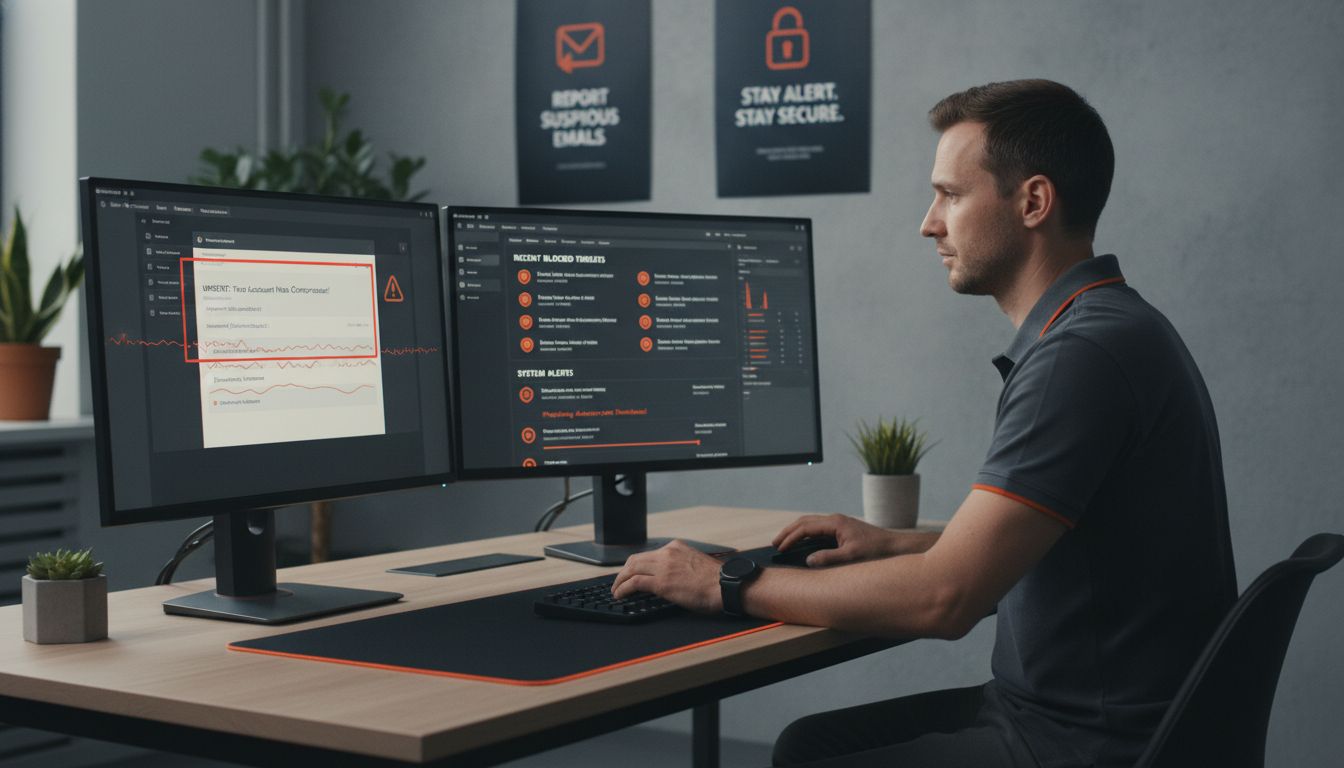 These malicious programs are typically delivered through carefully crafted email attachments that appear legitimate, making employee awareness and robust email security protocols essential.
Businesses must adopt a proactive, multilayered approach to email threat prevention. This includes implementing advanced email filtering technologies, conducting regular security awareness training, and establishing clear protocols for handling suspicious communications.
Learn more about identifying potential threats in our guide on how to spot phishing emails.
Key Email Security Controls and Solutions
Implementing robust email security requires a comprehensive approach that integrates multiple defensive technologies and strategic protocols. According to Wikipedia, one critical component is the DMARC protocol (Domain-based Message Authentication, Reporting, and Conformance), which provides essential protection against email phishing and spoofing attacks by authenticating email domain integrity.
Key email security controls encompass several critical strategies:
Here’s a comparative overview of essential email security controls:
| Security Control | Main Purpose | Example Technologies |
|---|---|---|
| Email Encryption | Protects message privacy | TLS PGP |
| Advanced Threat Protection | Detects and blocks malicious content | Microsoft Defender Mimecast |
| Spam Filtering | Reduces unwanted emails | Proofpoint SpamAssassin |
| Sender Verification | Authenticates message origin | SPF DKIM DMARC |
| Attachment Sandboxing | Isolates and inspects files | FireEye FortiSandbox |
| Multi-Factor Authentication | Prevents unauthorised access | SMS OTP Authenticator Apps |
- Email Encryption: Protecting message contents from unauthorized access
- Advanced Threat Protection: Real-time scanning for malicious content
- Spam Filtering: Blocking unwanted and potentially dangerous communications
- Sender Verification: Authenticating legitimate email sources
- Attachment Sandboxing: Safely analyzing potentially harmful files
As recommended by cyber.gov.au, multi-factor authentication (MFA) represents a game-changing security measure. By requiring additional verification steps beyond traditional passwords, MFA significantly reduces the risk of unauthorized email account access, creating an additional layer of protection against potential breaches.
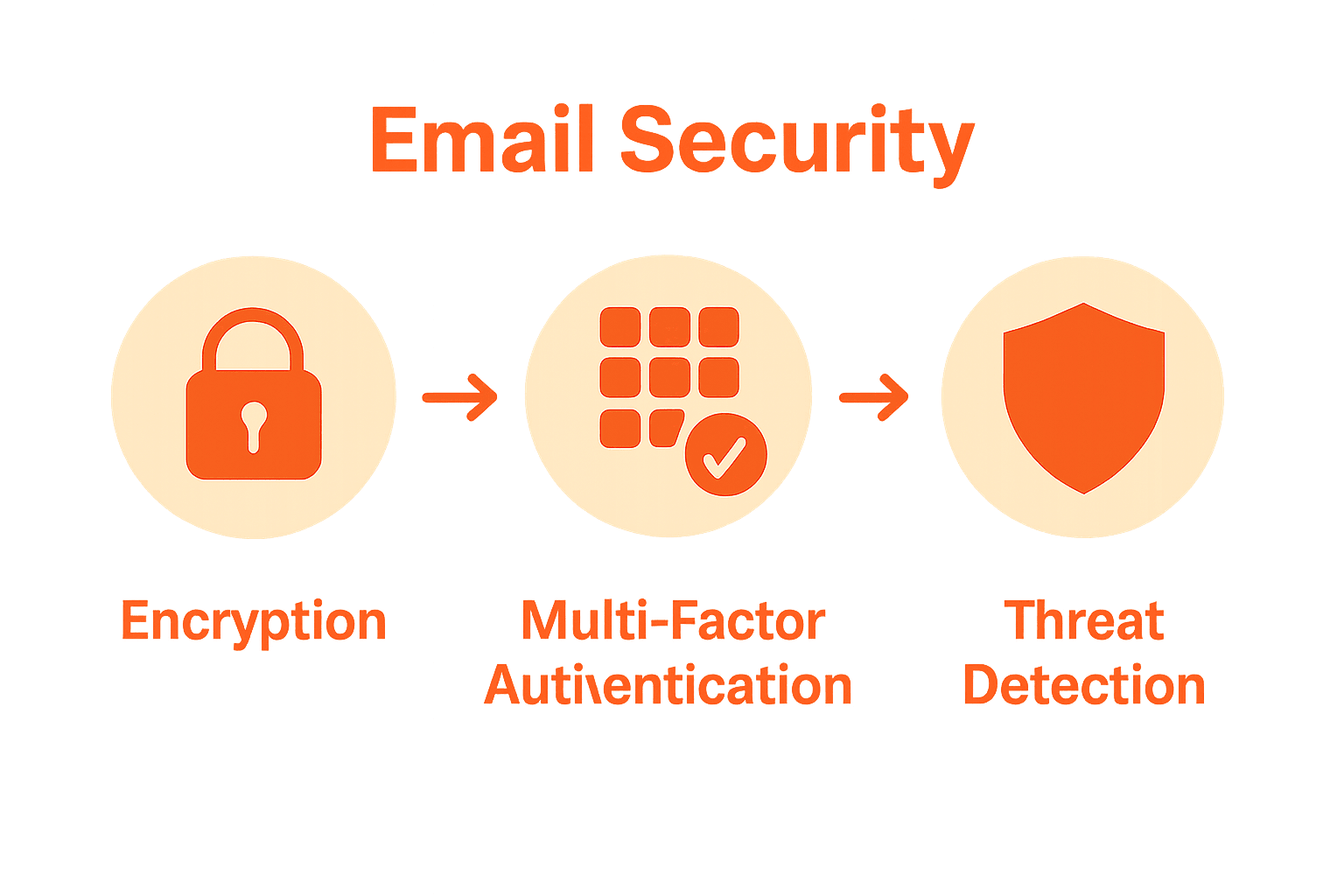
Businesses must adopt a holistic approach to email security, combining technological solutions with comprehensive employee training. This means not just implementing sophisticated tools, but also creating a culture of cybersecurity awareness where team members understand potential risks and know how to respond to suspicious communications.
For a deeper understanding of email authentication strategies, explore our guide on email authentication protocols.
Regulatory Compliance and South African Law
Navigating the complex landscape of email security requires a comprehensive understanding of legal obligations and regulatory frameworks specific to South African businesses. According to POPIA, the Protection of Personal Information Act mandates stringent requirements for organizations to implement robust measures protecting personal data, with specific emphasis on securing email communications against unauthorized access and potential breaches.
Key compliance considerations for businesses include:
- Data Protection: Implementing comprehensive security protocols
- Consent Management: Obtaining explicit permission for data processing
- Privacy Notifications: Transparent communication about data handling practices
- Access Control: Restricting personal information access
- Breach Reporting: Establishing clear incident disclosure procedures
The POPIA framework establishes critical legal obligations that extend beyond traditional IT security measures. Organizations must develop proactive strategies that not only protect digital communications but also demonstrate accountability through documented security processes, regular risk assessments, and employee training programs.
Beyond technical implementations, businesses must cultivate a culture of data privacy and security consciousness. This involves creating comprehensive policies, conducting regular compliance audits, and ensuring that email communication practices align with both technological best practices and legal requirements.
For a deeper understanding of how these regulations impact your business, explore our guide on what the PoPI Act means for you.
Employee Responsibilities and Policy Development
Effective email security hinges critically on employee awareness and organizational policy. As recommended by cyber.gov.au, organizations must develop clear policies outlining acceptable email use and comprehensive security protocols, with a primary focus on training employees to recognize and mitigate potential cyber threats.
Key employee responsibilities in email security include:
- Recognizing Suspicious Communications: Identifying potential phishing attempts
- Reporting Potential Threats: Immediately alerting IT security teams
- Following Authentication Protocols: Using multi-factor authentication
- Maintaining Password Hygiene: Creating strong, unique passwords
- Avoiding Unauthorized Email Forwarding: Preventing potential data leaks
According to in.gov, comprehensive employee education should focus on recognizing specific phishing indicators, such as:
- Unexpected requests for personal information
- Inconsistent or suspicious email links
- Generic or impersonal greetings
- Urgent or threatening language
- Emails from unknown or slightly altered sender addresses
Policy development must be a collaborative process that combines technical expertise with practical, user-friendly guidelines. This involves creating comprehensive documentation, conducting regular training sessions, and establishing clear consequences for policy violations while maintaining a supportive, educational approach to cybersecurity.
For a practical reference point, review our sample internet and email usage policy to understand how these principles can be implemented in a real-world context.
Avoiding Pitfalls and Security Breaches
Navigating the complex landscape of email security requires a proactive and strategic approach to identifying and mitigating potential vulnerabilities. According to cyber.gov.au, organizations can significantly reduce their risk profile by regularly updating email security protocols and conducting comprehensive employee training.
Common email security pitfalls that businesses must vigilantly guard against include:
- Weak Password Practices: Using predictable or reused passwords
- Unverified Email Attachments: Opening files from unknown sources
- Inadequate Backup Procedures: Failing to maintain secure data redundancies
- Lack of Multi-Factor Authentication: Relying solely on password protection
- Insufficient Security Training: Not educating employees about emerging threats
As highlighted by in.gov, awareness is the first line of defense. Employees must be trained to recognize sophisticated phishing tactics, such as emails containing:
- Unexpected urgent language
- Generic, impersonal greetings
- Suspicious or inconsistent links
- Requests for sensitive personal information
- Slightly altered sender email addresses
Effective security breach prevention demands a holistic approach that combines technological solutions with continuous learning and adaptive strategies. This means implementing robust technical safeguards while simultaneously cultivating a culture of security consciousness within the organization.
To dive deeper into protecting your business from potential cyber threats, explore our guide on how not to get hacked.
Strengthen Your Business Email Security with Expert IT Support
Email security challenges such as phishing attacks, ransomware threats, and unauthorized access are putting South African businesses at risk every day. The article outlines the importance of using multilayered protection strategies including encryption, multi-factor authentication and employee training to protect sensitive data and ensure compliance with regulations like POPIA. These risks can leave your operations vulnerable but can be managed effectively with the right approach.
At Techtron, we understand how critical it is for professional service firms to maintain strong, proactive email security. Our fully managed IT solutions include cybersecurity services, compliance assistance and ongoing monitoring designed to reduce your technical burden and safeguard your business from evolving email threats. Don’t leave your email security to chance. Get started today by exploring our comprehensive IT management services and see how our tailored solutions can protect your digital communications and improve operational continuity.
Frequently Asked Questions
What are the essential components of email security for businesses?
Email security for businesses involves multiple layers of protection, including encryption protocols, multi-factor authentication, advanced threat detection systems, spam filtering, and employee training.
How can businesses defend against phishing attacks?
Businesses can defend against phishing attacks by implementing advanced email filtering technologies, providing regular security awareness training for employees, and establishing clear procedures for reporting suspicious emails.
What is the role of multi-factor authentication in email security?
Multi-factor authentication enhances email security by requiring users to provide additional verification steps beyond traditional passwords, significantly reducing the risk of unauthorized access to email accounts.
What measures can employees take to enhance email security?
Employees can enhance email security by recognizing suspicious communications, reporting potential threats, adhering to authentication protocols, maintaining strong password hygiene, and avoiding unauthorized email forwarding.