

Work Life Balance Technology: Complete Guide for Business
Did you know that over half of South African enterprises have adopted AI and hybrid work models to improve employee well-being? As technology transforms the way people work, balancing professional tasks with personal wellness has become more urgent than ever. Modern digital solutions now empower employees to set healthy boundaries, stay productive, and care for their mental health while meeting organizational goals.
Key Takeaways
| Point | Details |
|---|---|
| Integration of Technology | Work life balance technology combines digital tools and frameworks to enhance employee wellness while addressing productivity. |
| Diverse Solutions | Key technologies include AI chatbots, remote collaboration platforms, and wellness applications that facilitate efficient management of work and personal responsibilities. |
| Strategic Implementation | Successful adoption requires a clear strategy that includes redesigning workspaces, establishing hybrid policies, and providing robust support systems. |
| Risks Management | Organizations must proactively navigate risks related to infrastructure, psychological well-being, and overall performance to ensure effective work-life balance solutions. |
Table of Contents
- Defining Work Life Balance Technology
- Types Of Technologies For Work Life Balance
- Key Features And Business Applications
- Implementing Technology For Better Balance
- Risks And Challenges Of Digital Solutions
Defining Work Life Balance Technology
Work life balance technology represents an integrated approach to leveraging digital tools and strategic frameworks that help employees manage professional responsibilities while maintaining personal wellness and productivity. As enterprises evolve, these technologies emerge as critical solutions for supporting modern workforce dynamics.
According to recent research on South African enterprises, organisations are increasingly adopting AI and hybrid work models to improve employee well-being. These technologies fundamentally transform traditional work structures by enabling:
- Flexible remote work arrangements
- Real-time collaboration platforms
- Intelligent scheduling and time management tools
- Automated task prioritization systems
- Wellness tracking and mental health support applications
At its core, work life balance technology goes beyond simple productivity tracking. Read more about modern workplace technology that empowers employees to create sustainable, healthy work environments. The goal is not just efficiency, but holistic employee engagement that recognizes individual needs while maintaining organizational performance standards.
These technological solutions represent a strategic response to changing workforce expectations, where professionals seek meaningful integration between professional goals and personal well-being. By providing intelligent, adaptive tools, businesses can create more resilient, satisfied, and high-performing teams.
Types of Technologies for Work Life Balance
Work life balance technologies encompass a diverse range of digital solutions designed to support employees in managing professional demands while preserving personal well-being. These technologies have become increasingly sophisticated, addressing multiple dimensions of workplace integration and personal productivity.
According to research on South African enterprises, key technologies driving work-life balance include:
- AI Chatbots: Providing instant support and managing workload inquiries
- Remote Collaboration Platforms: Enabling seamless digital communication
- Cloud-Based Tools: Supporting flexible work arrangements
- Wellness Digital Applications: Tracking mental health and personal performance
Specifically, our guide on essential staff productivity tools highlights that platforms like Microsoft Teams, Trello, and Google Workspace have become instrumental in creating structured remote work environments. These tools offer features that help professionals:
- Organize tasks efficiently
- Communicate across distributed teams
- Maintain clear work boundaries
- Track personal and professional progress
The ultimate goal of these technologies is to create a harmonious ecosystem where work requirements and personal well-being coexist seamlessly, empowering employees to perform optimally while maintaining their mental and emotional health.
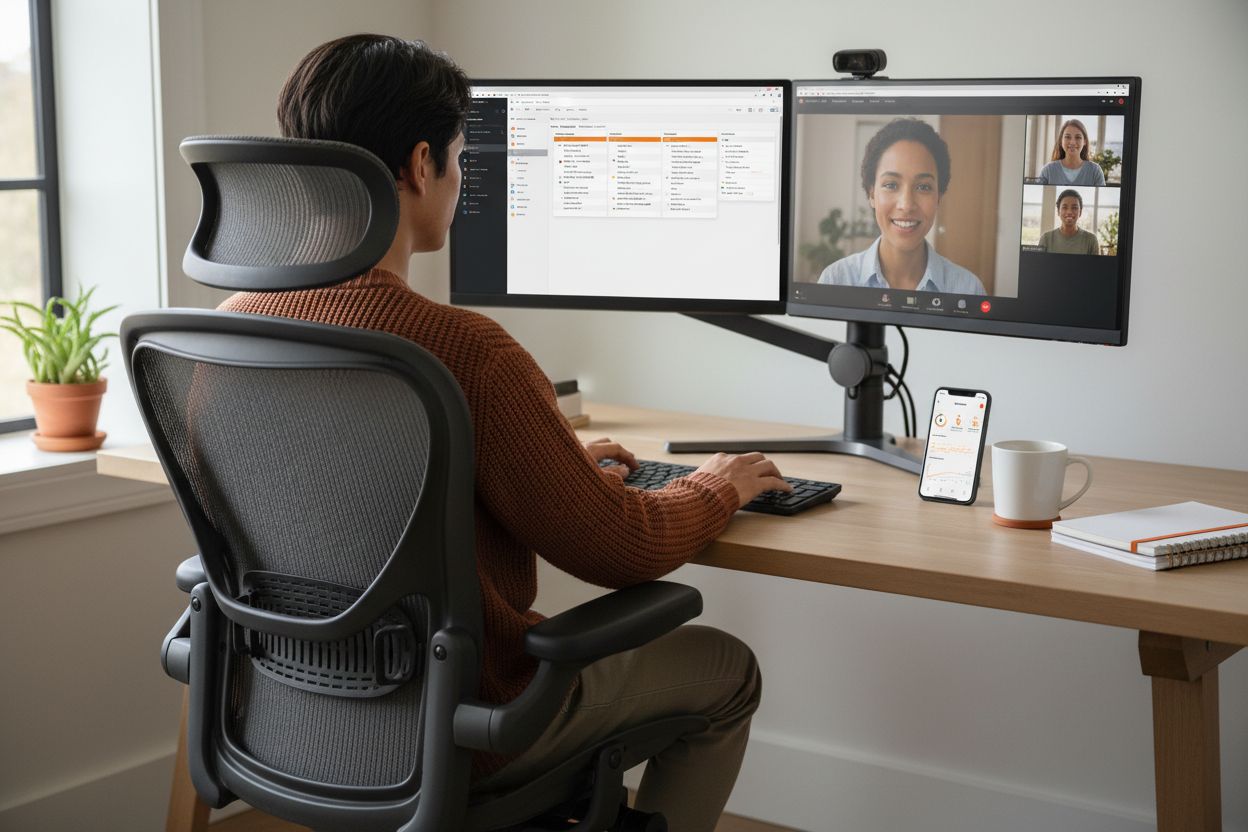
Here’s a summary of the main types of work-life balance technologies and their typical uses:
| Technology Type | Primary Function | Example Tools |
|---|---|---|
| AI Chatbots | Instant support Workload queries |
Microsoft Teams bots Slackbot |
| Remote Collaboration | Seamless team communication | Zoom Microsoft Teams Google Meet |
| Cloud-Based Tools | Flexible task management | Trello Google Workspace |
| Wellness Applications | Personal wellbeing tracking | Headspace Calm Wellable |
Key Features and Business Applications
Work life balance technology represents a strategic approach for businesses to integrate employee wellness with organizational productivity. Our guide on business application security emphasizes the critical role of thoughtful technological implementation in creating sustainable work environments.
According to research on South African enterprises, successful business applications of work life balance technology include:
- Implementing clear hybrid-work policies
- Developing robust digital infrastructure
- Creating comprehensive wellness programs
- Offering flexible counselling services
- Establishing flexible work hour arrangements
Critical features that support effective work-life balance technologies involve:
- Schedule Blocking: Enabling employees to define clear work boundaries
- Defined Work Hours: Creating predictable and manageable time allocations
- Reliable Connectivity: Ensuring seamless remote work capabilities
- Tool Proficiency: Mastering project management and collaboration platforms
The ultimate business application is creating an ecosystem where technology serves as a bridge between professional performance and personal well-being, transforming traditional workplace dynamics into more human-centric, adaptive environments.
Implementing Technology for Better Balance
Successful implementation of work-life balance technology requires a strategic, multifaceted approach that goes beyond simply acquiring tools. Our guide on business technology optimization highlights the importance of holistic technological integration.
According to research on South African enterprises, effective implementation strategies involve:
- Redesigning physical office spaces
- Establishing clear hybrid-work policies
- Structuring virtual wellness programs
- Creating adaptable technological infrastructure
- Developing comprehensive employee support systems
Practical implementation steps include investing in:
- Reliable Infrastructure: UPS, fibre, and mobile internet backups
- Dedicated Workspaces: Ergonomic home office setups
- Boundary Management Tools: Calendar and scheduling applications
- Communication Platforms: Seamless mixed-mode workflow technologies
The goal is creating a flexible technological ecosystem that supports employee autonomy while maintaining organizational productivity. By thoughtfully integrating these technologies, businesses can transform traditional work models into dynamic, human-centered environments that prioritize both professional performance and personal well-being.
Risks and Challenges of Digital Solutions
Digital work-life balance technologies present complex challenges that organizations must strategically navigate to ensure effective implementation. Our guide on understanding the cyber threat landscape highlights the multifaceted risks inherent in digital workplace solutions.
According to research on South African remote workers, significant infrastructure and operational challenges include:
- Persistent load-shedding disrupting work continuity
- Unreliable internet connectivity
- Blurred work-home boundaries
- Increased risk of employee burnout
- Potential cybersecurity vulnerabilities
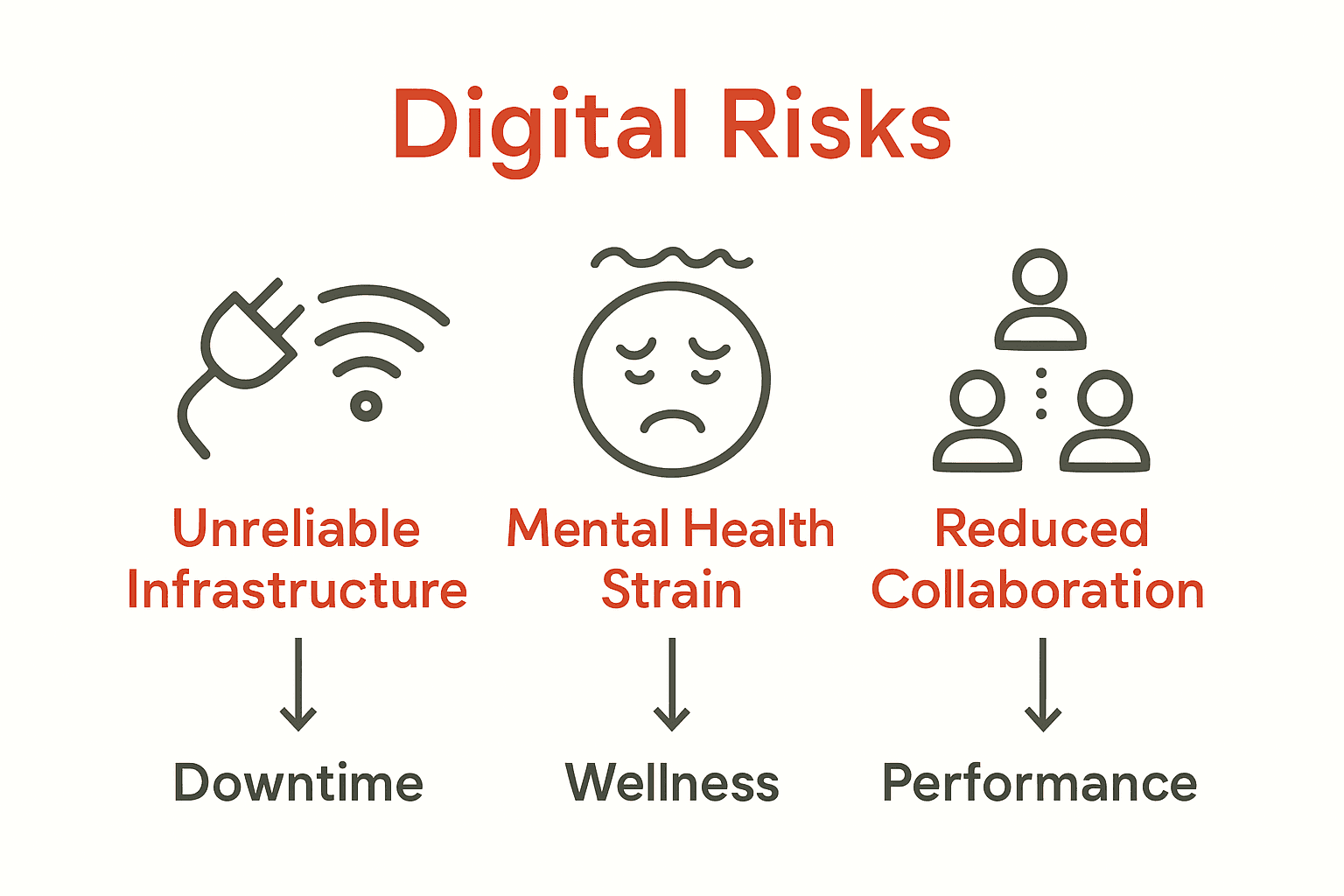
The primary risks businesses face can be categorized into three critical domains:
-
Technological Infrastructure Risks
- Inconsistent power supply
- Bandwidth limitations
- Hardware and software compatibility issues
-
Psychological and Wellness Risks
- Mental health deterioration
- Potential social isolation
- Difficulty maintaining professional boundaries
-
Organizational Performance Risks
- Reduced team collaboration
- Decreased productivity
- Challenges in performance monitoring
Successful digital work-life balance strategies require a proactive, holistic approach that addresses technological, psychological, and organizational challenges simultaneously.
Transform Your Work Life Balance With The Right Technology
Is your business struggling to set up meaningful work life balance frameworks for your team? Many organisations face complex tech obstacles like unreliable connectivity, unclear digital boundaries, and the stress of managing hybrid work. As highlighted in this guide, these challenges can damage both productivity and staff well-being. Letting digital problems linger can make your teams feel overwhelmed and disconnected. But you can build a modern, balanced workplace where technology enhances both professional performance and employee satisfaction.
Take control by partnering with a trusted managed IT provider who understands the South African business landscape. At TECHTRON, we offer expert solutions in IT management, cyber security, and cloud integration that are designed for companies who want to reduce risk and empower their people. Explore our managed services and discover how to create a resilient, flexible and happy workforce. The future of work life balance starts here. Act today for better business outcomes and a team that thrives.
Frequently Asked Questions
What is work life balance technology?
Work life balance technology refers to digital tools and frameworks that help employees manage their professional responsibilities while maintaining personal wellness and productivity. It includes solutions that enable flexible work arrangements, real-time collaboration, and wellness support.
What are some types of technologies that support work life balance?
Work life balance technologies include AI chatbots for instant support, remote collaboration platforms like Zoom and Microsoft Teams, cloud-based task management tools such as Trello and Google Workspace, and wellness applications that track mental health and personal performance.
How can businesses implement work life balance technology effectively?
Effective implementation involves redesigning office spaces, establishing clear hybrid-work policies, structuring virtual wellness programs, creating adaptable technological infrastructure, and developing comprehensive employee support systems.
What are the risks associated with digital work life balance technologies?
Risks include technological infrastructure issues such as unreliable internet and persistent power outages, psychological challenges like employee burnout and social isolation, and organizational performance risks related to decreased team collaboration and productivity.