

Best Practices for Remote Teams – Impact on SA Firms
Over 60 percent of south-african businesses now employ remote teams, reflecting a rapid shift from traditional office spaces to distributed work models. For IT managers in financial and engineering firms, this transformation means balancing flexibility, productivity, and data security across multiple locations. Unpacking key concepts of remote teams helps clarify how digital communication, robust cybersecurity, and strong team culture are reshaping work for south-african organisations focused on sustained growth and compliance.
Key Takeaways
| Point | Details |
|---|---|
| Remote teams are now mainstream in South Africa | The shift towards remote work has been accelerated by the COVID-19 pandemic, necessitating robust communication and productivity frameworks. |
| Successful communication is critical | Effective collaboration tools must be aligned with team workflows to support productivity and cohesion in a distributed environment. |
| Focus on measurable outcomes | Remote productivity management requires clear performance metrics that prioritise deliverables over time spent working, fostering accountability. |
| Legal compliance is essential | Organisations must navigate South Africa’s complex regulatory landscape to ensure employee rights and data protection within remote work policies. |
Defining Remote Teams and Key Concepts
Remote teams represent a modern work arrangement where professionals collaborate across different physical locations, leveraging digital technologies to maintain productivity and communication. In the South African context, these teams have rapidly evolved from a niche concept to a mainstream workforce strategy, particularly accelerated by the COVID-19 pandemic. Emerging workforce trends demonstrate significant shifts in how organisations approach work flexibility and distributed team management.
At its core, a remote team consists of professionals who perform their work duties from various geographic locations, connected through digital communication platforms, project management tools, and collaborative software. Unlike traditional office-based teams, remote teams operate with greater geographical dispersion, requiring robust technological infrastructure and deliberate communication strategies. Psychological and structural dynamics reveal that successful remote teams depend on factors like clear expectations, technology access, and strong interpersonal connections.
Key characteristics of effective remote teams include:
- Flexible work arrangements
- Strong digital communication capabilities
- Self-motivated team members
- Clear performance metrics
- Advanced technological integration
- Regular virtual collaboration protocols
Pro Tip for Remote Team Success: Establish clear communication protocols and invest in reliable digital collaboration tools that match your team’s specific workflow requirements.
The transformation towards remote work represents more than a temporary trend – it signals a fundamental reimagining of workplace dynamics in South African professional environments.
Communication Tools and Collaboration Methods
Effective communication and collaboration are critical foundations for successful remote teams, particularly in the South African business landscape. Essential digital collaboration platforms have transformed how professionals interact, bridging geographical distances and maintaining productivity across diverse work environments.
Modern remote teams rely on a sophisticated ecosystem of communication technologies that support seamless interaction. Communication tools now encompass more than simple messaging platforms – they integrate video conferencing, project management, real-time collaboration, and secure file sharing. Popular solutions like Microsoft Teams, Slack, Zoom, and WhatsApp have become instrumental in creating virtual workspaces that mirror traditional office interactions, enabling teams to maintain connectivity and collaborative momentum.
Key characteristics of effective communication tools include:
- Real-time messaging capabilities
- Video conferencing functionality
- Screen sharing and collaborative document editing
- Integration with project management systems
- Strong security and encryption protocols
- Cross-platform accessibility
Pro Tip for Digital Communication: Select communication tools that align with your team’s specific workflow and provide comprehensive integration capabilities across different work processes.
Navigating the complex landscape of digital communication requires strategic tool selection, understanding team dynamics, and creating clear communication protocols that transcend physical boundaries.
The table below outlines how leading digital communication platforms support remote teams in key business areas:
| Platform | Collaboration Features | Business Impact | Security Standards |
|---|---|---|---|
| Microsoft Teams | File sharing, chat, meetings | Streamlines teamwork | Enterprise-grade encryption |
| Slack | Channel messaging, integrations | Real-time project updates | OAuth and SSO support |
| Zoom | Video calls, webinars | Enhances face-to-face contact | Encrypted video sessions |
| Instant messaging, media | Quick, informal exchanges | End-to-end encryption |
Managing Productivity and Accountability Remotely
Remote team productivity requires a strategic approach that balances technological infrastructure with human-centric management practices. Performance management techniques for distributed teams have evolved significantly, emphasising continuous communication, clear expectations, and trust-based accountability models that transcend traditional office monitoring methods.

Successful remote productivity management hinges on establishing robust performance frameworks that measure outcomes rather than time spent working. Research in South African technology organisations demonstrates that effective remote work demands reliable digital infrastructure, transparent performance metrics, and proactive communication strategies.
Key strategies for maintaining remote team productivity include:
- Implementing clear, measurable performance objectives
- Using project management tools with real-time tracking
- Scheduling regular virtual check-ins and feedback sessions
- Establishing transparent communication channels
- Creating individualised productivity benchmarks
- Developing trust-based performance evaluation methods
Pro Tip for Remote Productivity: Design flexible performance metrics that focus on deliverables and impact, rather than traditional time-based assessments.
Navigating remote productivity requires a nuanced approach that recognises individual work styles while maintaining organisational performance standards.
Cybersecurity Essentials for Distributed Teams
Cybersecurity has become a critical priority for South African organisations with distributed workforces, demanding comprehensive strategies that protect digital assets across multiple remote access points. Remote workforce cybersecurity strategies require a multifaceted approach that addresses technological vulnerabilities and human behaviour simultaneously.
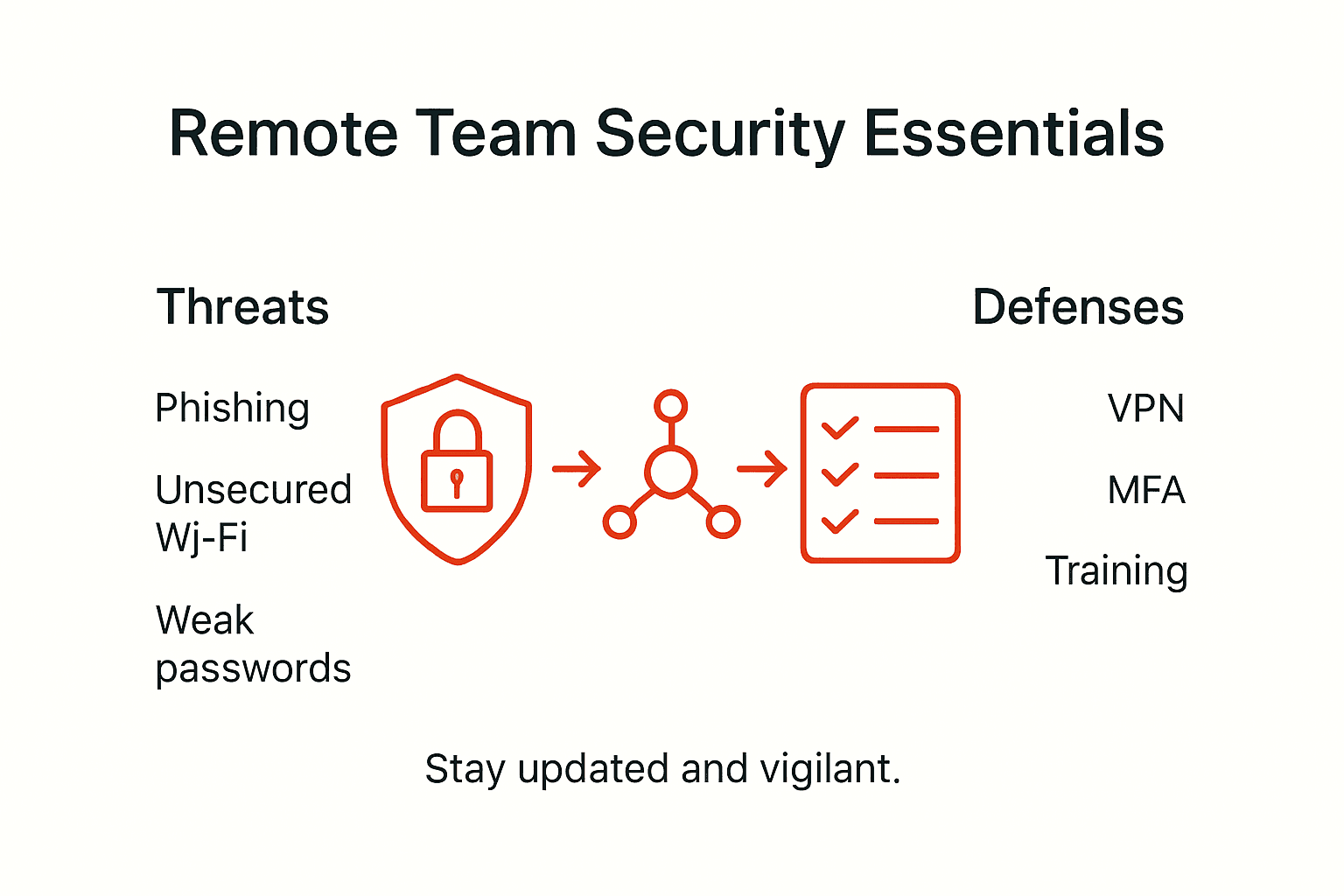
The digital security landscape for remote teams involves implementing robust protection mechanisms that safeguard sensitive information while enabling seamless operational functionality. Critical components include secure virtual private networks (VPNs), multi-factor authentication, encrypted communication channels, and comprehensive employee training programmes that transform team members into active cybersecurity defenders.
Key cybersecurity essentials for distributed teams include:
- Implementing strong password management protocols
- Utilising endpoint protection software
- Conducting regular security awareness training
- Establishing clear bring-your-own-device (BYOD) policies
- Enforcing consistent software update practices
- Creating incident response and data breach management plans
- Monitoring and logging network access activities
Pro Tip for Digital Security: Develop a comprehensive cybersecurity policy that is both technically rigorous and user-friendly, ensuring team members understand and willingly comply with security protocols.
Effective cybersecurity in distributed teams requires continuous education, adaptive technological solutions, and a proactive organisational culture that prioritises digital protection.
Fostering Company Culture and Trust Remotely
Organisational culture in remote work environments requires deliberate, strategic approaches that transcend traditional workplace interactions. South African organisations must reimagine team connection through intentional digital engagement strategies that build meaningful relationships and maintain strong cultural foundations.
Successful remote team cultures are built on transparent communication and consistent interpersonal investment. Leaders must create structured opportunities for team members to interact beyond task-oriented exchanges, developing psychological safety and mutual understanding through virtual team-building activities, regular check-ins, and purposeful collaboration platforms.
Key strategies for building remote team culture include:
- Establishing regular virtual social interactions
- Creating transparent communication channels
- Implementing recognition and appreciation programmes
- Developing clear shared team values
- Encouraging informal digital interactions
- Supporting individual team member well-being
- Providing continuous professional development opportunities
Pro Tip for Remote Culture Building: Design intentional virtual interaction frameworks that balance professional objectives with genuine human connection, ensuring team members feel valued and understood.
Building trust in distributed teams requires consistent effort, emotional intelligence, and a commitment to creating meaningful connections that transcend physical distance.
Addressing South African Legal and Infrastructure Issues
Regulatory frameworks for remote work in South Africa represent a complex landscape of evolving legal considerations that directly impact organisational strategy and employee rights. The intersection of technology, labour law, and digital infrastructure creates unique challenges for businesses navigating the remote work ecosystem.
The legal infrastructure surrounding remote work encompasses multiple dimensions, including data protection, occupational health and safety, employee classification, and technological access rights. Comprehensive legal analysis of telework reveals significant gaps in existing legislation that require nuanced interpretation and proactive organisational approaches.
Key legal and infrastructure considerations include:
- Compliance with Protection of Personal Information (PoPI) Act
- Defining clear remote work employment contracts
- Establishing equipment and technology provision protocols
- Creating comprehensive health and safety guidelines
- Implementing data security and privacy measures
- Addressing right to disconnect regulations
- Managing cross-jurisdictional employment complexities
Pro Tip for Legal Compliance: Develop a comprehensive remote work policy that explicitly addresses legal requirements, technological infrastructure, and employee rights within the South African regulatory context.
Successful navigation of remote work legal frameworks demands ongoing adaptation, proactive policy development, and a deep understanding of the evolving technological and regulatory landscape.
Here’s a summary comparing core focus areas in remote team management and their unique impact on South African organisations:
| Focus Area | Main Challenge | Critical Benefit | Local Consideration |
|---|---|---|---|
| Communication | Time zone differences | Real-time collaboration | Internet access variability |
| Productivity | Measuring output remotely | Flexible work practices | Need for reliable power supply |
| Cybersecurity | Protecting distributed data | Enhanced information safety | PoPI Act compliance |
| Company Culture | Building trust virtually | Team cohesion and loyalty | Cultural diversity in teams |
| Legal/Infrastructure | Navigating regulation | Secure remote employment | Labour law complexity |
Strengthen Your Remote Teams with Expert IT Solutions
Managing remote teams in South African firms brings unique challenges like secure digital communication, reliable productivity tracking, and stringent cybersecurity compliance with the PoPI Act. If your business needs to establish clear performance metrics, safeguard sensitive data, and maintain seamless collaboration across distributed teams, these pain points can slow growth and increase risks.
At Techtron, we understand the complexities outlined in the article “Best Practices for Remote Teams – Impact on SA Firms.” Our tailored IT management services, including proactive cybersecurity, cloud integration with Microsoft 365 and Azure, and network security, are designed to empower professional service firms to conquer these challenges. With fully managed IT services and backup and disaster recovery, we help reduce your technical burden while ensuring compliance and operational continuity.
Transform your remote team’s potential today. Visit Techtron to discover how our trusted IT solutions can secure your infrastructure, optimise performance, and foster resilient remote work environments. Don’t wait to protect and empower your workforce in this new digital era.
Frequently Asked Questions
What are the key characteristics of effective remote teams?
Effective remote teams exhibit flexibility in work arrangements, strong digital communication capabilities, self-motivated team members, clear performance metrics, and advanced technological integration.
How can companies ensure productivity in remote teams?
Companies can enhance productivity by implementing measurable performance objectives, utilizing project management tools for real-time tracking, scheduling regular virtual check-ins, and fostering transparent communication channels.
What cybersecurity measures should remote teams implement?
Remote teams should implement strong password management, utilize endpoint protection software, conduct regular security awareness training, enforce BYOD policies, and create incident response plans to safeguard sensitive information.
How can organizations build trust and culture in remote teams?
Organizations can build trust and culture by establishing regular virtual social interactions, creating transparent communication channels, recognizing individual achievements, promoting shared team values, and supporting team members’ well-being.