

Digital Transformation for Businesses: Complete South Africa Guide
Did you know that over 70 percent of digital transformation projects worldwide fail to meet their goals? For South African businesses, digital transformation is more than a buzzword. It touches every aspect of operations, reshaping the way companies compete, serve customers, and build resilience. Understanding how modern technologies redefine business models can help organizations create real value, manage risks, and keep up with a fast-changing market.
Key Takeaways
| Point | Details |
|---|---|
| Comprehensive Strategy | Digital transformation requires a holistic approach that integrates technology with reimagined business models and operational processes. |
| Types of Transformation | Businesses can pursue various digital transformation types, including cloud computing, AI automation, and e-commerce tailored to their industry needs. |
| Leadership Involvement | Successful transformation initiatives necessitate strategic leadership alignment, especially from CEOs and CIOs, to guide the process effectively. |
| Risk Management & Compliance | Organizations must address risks related to system fragmentation, legal compliance, and investment scalability to ensure successful digital evolution. |
What Digital Transformation Means
Digital transformation represents a comprehensive strategic approach where organisations leverage advanced technologies to fundamentally reimagine their business models, operational processes, and customer experiences. According to McKinsey’s research, this isn’t just about implementing new technologies, but about creating a strategic reinvention that can dramatically improve profitability and competitive positioning.
In the South African context, digital transformation goes beyond simple technological upgrades. As detailed in the academic text “Digital Transformation in South Africa: Perspectives from an Emerging Economy”, it involves a holistic shift affecting multiple sectors including:
- Public sector governance
- Enterprise processes like banking and auditing
- Risk management strategies
- Marketing and customer engagement approaches
The core elements of successful digital transformation typically involve strategic technology adoption, developing digital talent, and creating agile, responsive organisational structures. Businesses must think ecosystem-wide, considering how digital technologies can create new value streams, improve operational efficiency, and enhance customer interactions. This means moving beyond traditional departmental boundaries and creating more interconnected, data-driven organisational models that can rapidly adapt to changing market conditions.
Read more about our digital innovation strategies to understand how businesses can effectively navigate this complex transformation journey. The key is not just technological implementation, but a fundamental cultural and strategic shift that positions organisations to thrive in an increasingly digital world.
Types Of Business Digital Transformation
Digital transformation isn’t a one-size-fits-all approach, but rather a nuanced strategy tailored to specific business needs and industry contexts. According to research from Business Cloud Africa, South African businesses are experiencing seven distinct types of digital transformation that are reshaping how organisations operate and compete.
Key types of digital transformation include:

- Cloud Computing Transformation: Migrating traditional infrastructure to scalable, flexible cloud environments
- AI and Automation Transformation: Implementing intelligent systems to streamline processes and enhance decision-making
- Cybersecurity Transformation: Developing robust digital security frameworks to protect against evolving digital threats
- E-commerce and Digital Payments: Expanding digital transaction capabilities and mobile payment ecosystems
Industry-specific digital transformations are particularly notable across sectors like finance, healthcare, manufacturing, and agriculture. Research highlights that each industry is leveraging unique technological solutions. For instance, financial services are adopting blockchain and fintech innovations, while agricultural businesses are integrating Internet of Things (IoT) technologies for precision farming and resource management.
Here’s a summary of the main types of digital transformation seen in South African businesses:
| Type | Key Focus | Example Sectors |
|---|---|---|
| Cloud Computing | Flexible infrastructure | Finance Retail |
| AI & Automation | Process efficiency Decision support |
Manufacturing Services |
| Cybersecurity | Digital risk management | Banking Healthcare |
| E-commerce & Payments | Online sales Mobile payments |
Retail Hospitality |
| Industry-Specific Tech | Tailored digital solutions | Agriculture Finance |
Learn about our digital transformation trends to understand how businesses can strategically navigate these complex technological shifts. The ultimate goal is creating more adaptive, efficient, and innovative organisational models that can quickly respond to changing market dynamics.
How Digital Transformation Works
Digital transformation is a structured, strategic process that requires comprehensive organizational commitment and sophisticated technological integration. According to research from the South African Journal of Business Management, successful digital transformation is driven by key leadership roles, particularly the strategic involvement of CEOs and Chief Information Officers (CIOs) who orchestrate the entire change management process.
The core mechanisms of digital transformation typically involve several critical stages:
- Leadership Alignment: Establishing clear digital strategy and vision from top management
- Data Management: Creating robust data infrastructure and analytics capabilities
- Talent Development: Recruiting and training digital skills across the organization
- Technology Integration: Implementing scalable, interconnected digital solutions
McKinsey’s research highlights additional crucial transformation mechanisms. These include adopting agile methodological approaches that break down traditional organizational silos, leveraging ecosystem partnerships, and strategically using mergers and acquisitions to build advanced digital capabilities. The process is not just about technology implementation, but about fundamentally reimagining how businesses operate and create value.
Explore our disruptive technology insights to understand the nuanced approach businesses must take. Successful digital transformation requires a holistic approach that combines technological innovation, strategic leadership, and a culture of continuous learning and adaptation.
Requirements And Strategic Planning
Strategic planning for digital transformation is a complex process that demands comprehensive and methodical approach. According to SAP’s digital transformation roadmap, successful implementation requires carefully structured strategic planning that addresses multiple critical dimensions of organizational change.
Key strategic planning requirements include:
- Digital Readiness Assessment: Thoroughly evaluating current technological capabilities and organizational maturity
- Key Performance Indicator (KPI) Establishment: Defining clear, measurable digital transformation objectives
- Change Management Integration: Developing robust frameworks for managing organizational transition
- Compliance and Legal Alignment: Ensuring transformation strategies meet regulatory requirements
Research from Twiga Consulting emphasizes the importance of avoiding technological silos and maintaining a long-term strategic perspective. This means creating integrated systems that communicate effectively across different organizational departments, rather than implementing disconnected technological solutions. The strategic planning must also consider critical South African regulatory frameworks like POPIA (Protection of Personal Information Act) and B-BBEE (Broad-Based Black Economic Empowerment) compliance.
Explore our comprehensive digital strategy guide to understand how businesses can develop a holistic, forward-thinking approach to digital transformation that balances technological innovation with strategic organizational needs.
Risks, Costs And Compliance
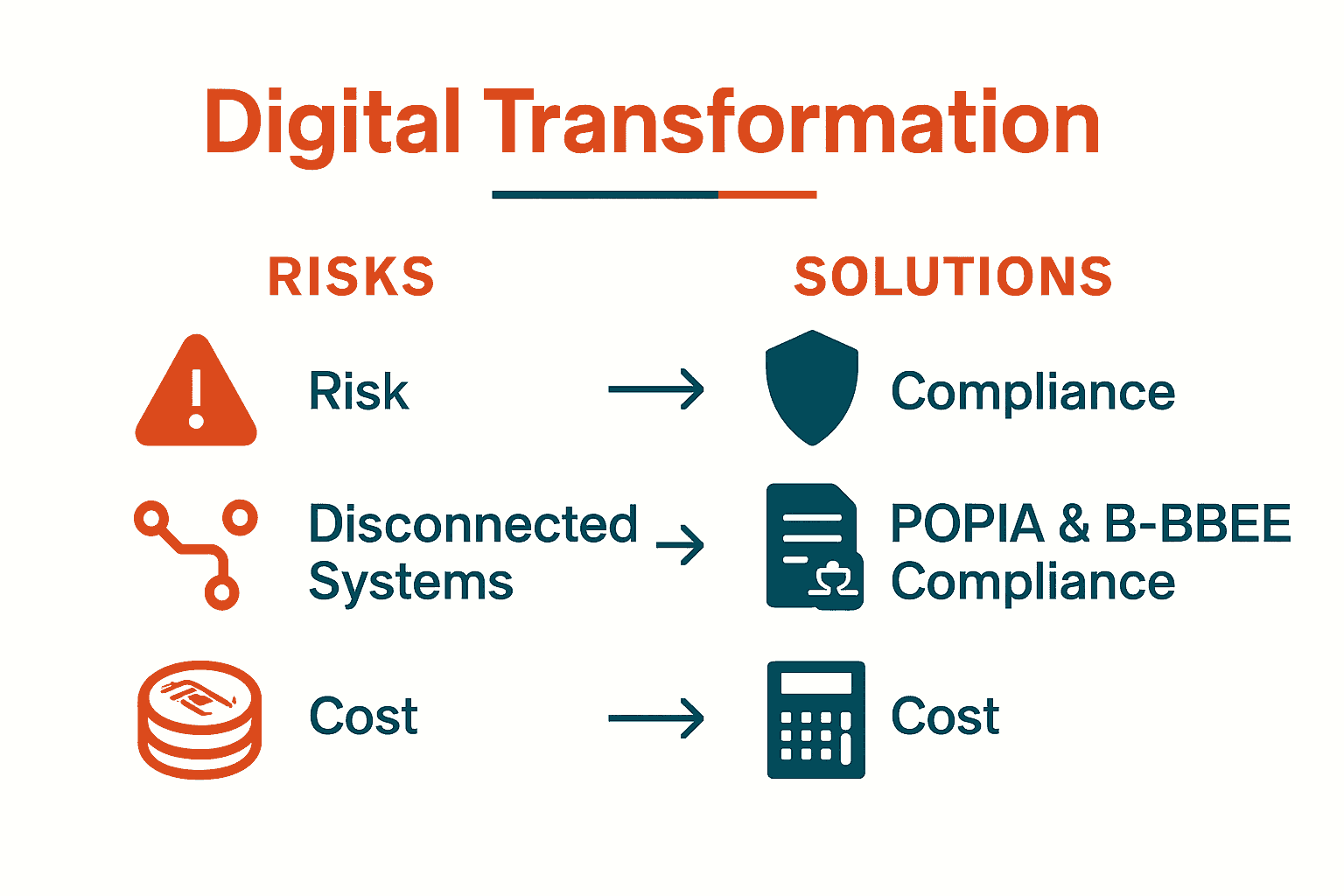
Digital transformation involves navigating a complex landscape of financial investment, technological risks, and stringent regulatory requirements. According to Twiga Consulting, organizations face multiple critical challenges that can derail their digital evolution if not carefully managed.
Key risks and compliance considerations include:
- System Fragmentation: Disconnected technological ecosystems increasing operational errors
- Change Management: Organizational resistance potentially blocking digital adoption
- Legal Compliance: Potential fines from non-adherence to regulations like POPIA and B-BBEE
- Investment Scalability: Risk of short-term projects that fail to deliver long-term value
Research from Sage highlights significant cost barriers for small and medium businesses. The upfront investment in hardware, software, and training can be substantial, with additional challenges around digital literacy and cybersecurity. However, emerging technologies like cloud computing and AI offer promising long-term efficiency gains that can offset initial expenses.
Learn more about our IT compliance strategies to understand how businesses can effectively mitigate risks while driving digital transformation. The key is developing a strategic, holistic approach that balances technological innovation with robust risk management and regulatory compliance.
Alternatives And Best Practices
Digital transformation strategies require innovative approaches that go beyond traditional technological implementation. According to Business Cloud Africa, businesses can explore alternative pathways that address both technological and infrastructural challenges unique to the South African context.
Key alternative approaches and best practices include:
- Renewable Energy Integration: Leveraging solar and smart grid technologies to mitigate load-shedding risks
- Fintech Solutions: Implementing blockchain and advanced payment technologies for supply chain optimization
- Digital Skills Development: Investing in targeted training programs to build organizational digital capabilities
- Cloud-Based Automation: Adopting affordable software solutions to streamline core business functions
Research from Sage emphasizes the importance of strategic technology adoption. This involves not just implementing new tools, but systematically integrating technologies that enable businesses to formalize operations, improve compliance processes, and create scalable growth opportunities. The focus should be on solutions that provide tangible operational efficiencies and competitive advantages.
Explore our service agreement options to understand how businesses can strategically approach digital transformation with flexible, tailored solutions that match their specific organizational needs and growth trajectories.
Facing Digital Transformation Barriers? Partner with Proven IT Experts
Many South African businesses struggle with fragmented technology, rising security risks, and pressure to meet compliance demands during digital transformation. As highlighted in the article, without a coordinated IT strategy and the right digital talent, organisations can face high costs, system errors, and missed growth opportunities.
Let us help. At Techtron, we specialise in securing your digital journey by providing managed IT services tailored to complex business needs. Our solutions safeguard your business with robust cybersecurity, enable smooth cloud integration with Microsoft 365 and Azure, and ensure you meet ever-changing compliance standards. Ready to move forward confidently and unlock the full potential of your digital transformation? Connect with our team at https://techtron.co.za today and secure your competitive edge now.
Frequently Asked Questions
What is digital transformation?
Digital transformation is a strategic approach where organizations leverage advanced technologies to fundamentally reimagine their business models, operational processes, and customer experiences.
What are the key types of digital transformation for businesses?
Key types include cloud computing transformation, AI and automation transformation, cybersecurity transformation, and e-commerce and digital payments.
How does digital transformation work within an organization?
Digital transformation requires leadership alignment, data management, talent development, and technology integration to effectively implement new digital strategies and solutions.
What are the risks associated with digital transformation?
Risks include system fragmentation, change management challenges, legal compliance issues, and the potential for significant upfront investment without immediate returns.