

Sustainable Business Practices: Complete Guide for 2025
Over 90 percent of business leaders now view sustainability as vital for long-term success. Consumer demand and stricter regulations are rapidly reshaping expectations for companies across every sector. Those adopting transparent, responsible business practices are seeing increased trust, stronger stakeholder relationships, and access to new market opportunities in a world where staying ahead means much more than just chasing profits.
Key Takeaways
| Point | Details |
|---|---|
| Sustainable Practices as Imperatives | Organizations must integrate ESG considerations into core strategies to drive holistic value, beyond traditional profit metrics. |
| Emerging Regulatory Landscape | South Africa is moving towards mandatory ESG reporting, necessitating transparency and accountability in corporate practices. |
| Technology’s Role in Sustainability | IT-driven organizations should leverage technologies like AI and blockchain to improve environmental impact tracking and compliance. |
| Importance of Risk Management | Companies need robust compliance protocols to mitigate legal and reputational risks associated with sustainability initiatives. |
Table of Contents
- Defining Sustainable Business Practices Today
- Key Types Of Sustainable Business Models
- Essential Strategies For It-Driven Organizations
- Legal And Regulatory Framework In South Africa
- Implementing Sustainability: Risks And Compliance
Defining Sustainable Business Practices Today
Sustainable business practices are no longer optional extras – they’re strategic imperatives transforming how organisations operate and compete. At their core, these practices integrate environmental, social, and governance (ESG) considerations into core business strategies, moving beyond traditional profit metrics to create holistic value.
According to Seneca ESG Insights, South Africa is experiencing a significant shift towards mandatory ESG reporting. Sustainability disclosures are increasingly becoming aligned with International Sustainability Standards Board (ISSB) frameworks, signaling a profound transformation in corporate accountability.
Key characteristics of sustainable business practices include:
- Transparent environmental impact measurement
- Commitment to social responsibility
- Ethical governance structures
- Long-term strategic planning beyond quarterly financial results
- Active carbon reduction and environmental management strategies
The existing King Code and JSE sustainability disclosure guidelines are already compelling businesses to adopt more ethical and transparent practices. These frameworks aren’t just regulatory checkboxes – they represent a fundamental reimagining of corporate responsibility. Companies that embrace these principles are positioning themselves as forward-thinking, resilient organisations capable of navigating complex global challenges while maintaining competitive advantage.
Key Types of Sustainable Business Models
Sustainable business models are transforming traditional corporate strategies by integrating environmental and social considerations into core operational frameworks. These innovative approaches go beyond conventional profit-driven models, focusing on creating holistic value for stakeholders, the environment, and society.
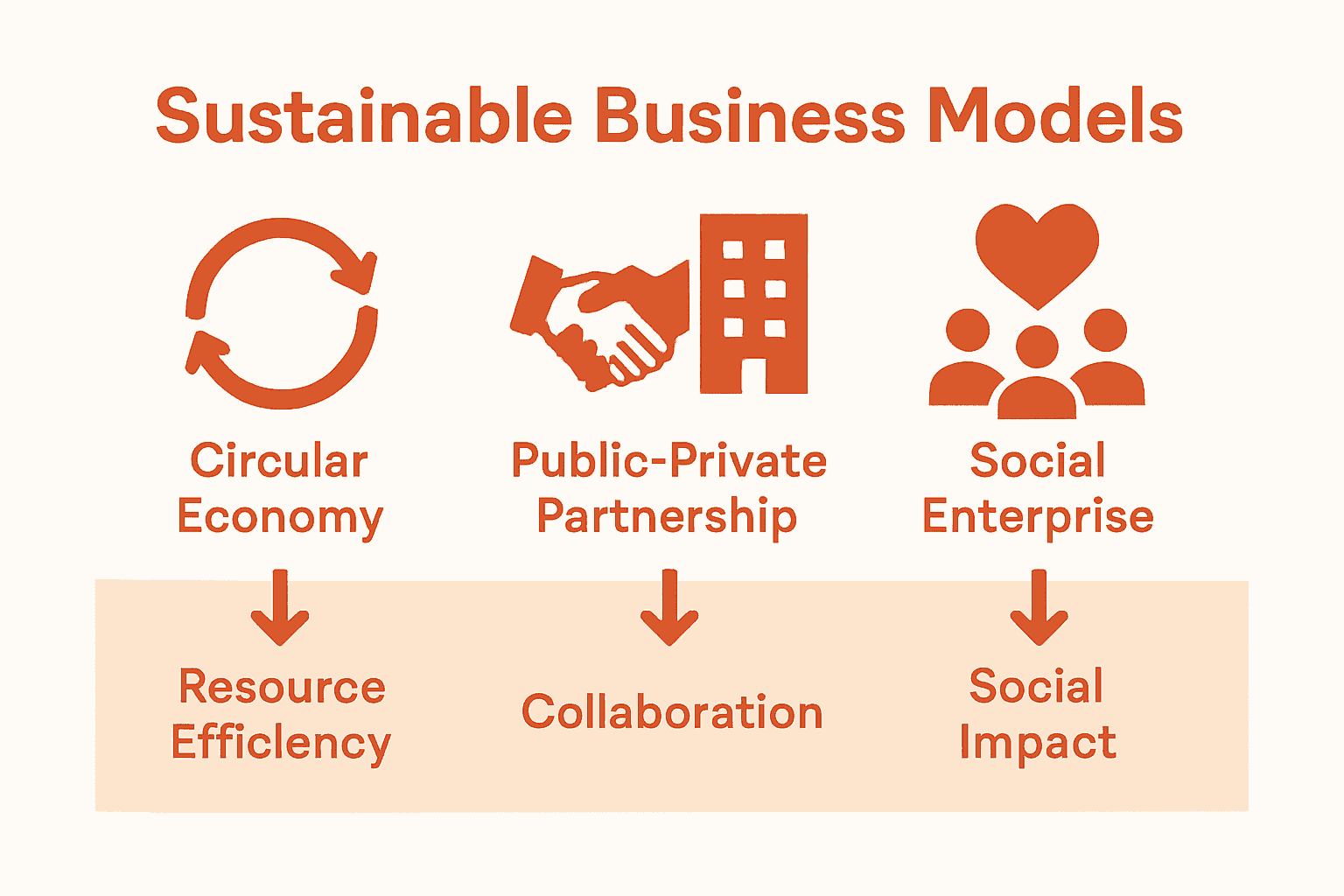
Circular Economy Models represent one of the most promising sustainable business approaches. As demonstrated by Ampli Energy, these models create platforms that enable businesses to access green power with innovative incentive structures. Their renewable energy trading platform allows companies of all sizes to purchase sustainable energy while receiving cashback, effectively creating a regenerative economic ecosystem.
Another critical sustainable business model is the Public-Private Partnership (PPP) framework. The South African government’s Renewable Energy Independent Power Producer Procurement Programme (REIPPPP) exemplifies this approach. According to Wikipedia, this model enables private sector investment in renewable energy through long-term power purchase agreements, creating a collaborative mechanism for sustainable infrastructure development.
Key sustainable business models include:
Here’s a comparison of key sustainable business models:
| Model Type | Core Focus | South African Example |
|---|---|---|
| Circular Economy | Resource efficiency Regenerative platforms |
Ampli Energy renewable trading |
| Public-Private Partnership | Infrastructure investment Collaborative development |
REIPPPP (Renewable Energy IPP Programme) |
| Social Enterprise | Social impact Community benefit |
Local education or healthcare NPOs |
| Platform-based Solutions | Technology-driven Scalable access |
Green energy digital marketplaces |
| Impact Investment | Purpose-driven ROI Measurable outcomes |
ESG-focused private equity funds |
- Circular Economy Models
- Public-Private Partnership Frameworks
- Social Enterprise Models
- Platform-based Sustainable Solutions
- Impact Investment Structures
These models share a common philosophy: creating business value while simultaneously addressing environmental challenges and social needs.
 By reimagining traditional business approaches, organisations can develop resilient, forward-thinking strategies that generate financial returns and positive societal impact.
Essential Strategies for IT-Driven Organizations
IT-driven organizations are increasingly recognizing technology’s pivotal role in achieving sustainable business objectives. Modern enterprises must leverage advanced digital tools and emerging technologies to create comprehensive, transparent, and efficient operational frameworks that align with environmental and regulatory requirements.
According to Business Tech Africa, technologies like Artificial Intelligence, Internet of Things (IoT), and blockchain are becoming critical for improving traceability, reducing waste, and enhancing transparency across complex business value chains. These technologies enable organizations to track, measure, and optimize their environmental impact with unprecedented precision.
Key IT-driven sustainability strategies include:
- Implementing advanced data management platforms
- Utilizing AI for predictive environmental analytics
- Developing blockchain-enabled supply chain transparency
- Creating IoT-based resource monitoring systems
- Integrating digital tools for regulatory compliance
For organizations seeking to enhance their technological capabilities, read more about our IT infrastructure lifecycle strategies that can support sustainable transformation. Companies that proactively adopt these integrated technological approaches will not only meet emerging regulatory requirements but also position themselves as innovative, responsible industry leaders capable of navigating complex environmental and technological landscapes.
Legal and Regulatory Framework in South Africa
South Africa’s legal and regulatory landscape for sustainable business practices is rapidly evolving, with new legislation designed to drive meaningful environmental and economic transformation. The Climate Change Act, proclaimed in March 2025, represents a significant milestone in establishing a comprehensive legal framework for climate policy and supporting the transition to a low-carbon economy.
According to Business Tech, this landmark legislation not only sets clear environmental targets but also actively promotes green job creation. Mondaq highlights the upcoming carbon-budget regulations, which will require companies to take substantial compliance actions starting January 2026.
Key regulatory requirements for businesses include:
- Mandatory carbon emissions registration
- Annual emissions budget reporting
- Participation in public consultation processes
- Developing comprehensive carbon reduction strategies
- Implementing transparent tracking mechanisms
For organizations navigating these complex regulatory environments, understanding privacy laws and compliance becomes crucial. Businesses must proactively adapt to these emerging legal frameworks, viewing them not as obstacles but as opportunities to innovate, reduce environmental impact, and create long-term sustainable value. The public consultation scheduled for August–September 2025 provides an critical opportunity for businesses to engage with and shape these transformative regulatory processes.
Implementing Sustainability: Risks and Compliance
Sustainability implementation is no longer a choice but a critical business imperative that demands strategic risk management and rigorous compliance protocols. Organizations must navigate a complex landscape of regulatory expectations, potential legal consequences, and reputational risks that can significantly impact their long-term viability.
According to Business Tech Africa, non-compliance with environmental regulations can result in severe penalties. For instance, businesses failing to meet expanded plastic recyclate targets face potential fines up to R5 million or even imprisonment. These high-stakes compliance requirements underscore the critical need for proactive and transparent sustainability strategies.
Key risks and compliance considerations include:
- Verifiable sustainability data reporting
- Avoiding greenwashing claims
- Implementing robust tracking mechanisms
- Developing comprehensive environmental strategies
- Maintaining transparent communication channels
Learn more about managing IT risk strategies that can support your sustainability compliance efforts. The Advertising Regulatory Board’s successful actions in 2024 against unsubstantiated sustainability claims highlight the increasing scrutiny businesses face. Organizations must therefore develop credible, data-driven approaches that demonstrate genuine commitment to environmental responsibility, transforming compliance from a legal obligation into a strategic competitive advantage.
Empower Your Sustainable Transformation with Trusted IT Management
Your journey toward sustainable business practices is only as strong as your operational foundations. As highlighted in this guide, today’s businesses face complex risks and mounting compliance pressures, especially in areas like ESG disclosures, IT-driven transparency, and robust data management. Many South African professional firms struggle with limited internal resources, unclear regulatory pathways, and the need for secure, reliable technology to track and report on sustainability goals. Navigating challenges such as carbon budget compliance, greenwashing risks, and transparent supply chain data can feel overwhelming without the right technology partner.
Take the stress out of your sustainability commitments. Partner with Techtron for managed IT services tailored to help your business stay compliant, secure, and ready for South Africa’s evolving regulatory landscape. Whether you need end-to-end IT infrastructure lifecycle support or technology that strengthens privacy and compliance, our solutions empower you to focus on long-term value creation. Visit Techtron now to future-proof your business and lead the way in sustainable transformation.
Frequently Asked Questions
What are sustainable business practices?
Sustainable business practices integrate environmental, social, and governance (ESG) considerations into core business strategies, moving beyond traditional profit metrics to create holistic value.
How can IT-driven organizations enhance their sustainability efforts?
IT-driven organizations can use advanced digital tools like AI, IoT, and blockchain to improve traceability, reduce waste, and enhance transparency, thus aligning their operations with sustainability objectives.
What are some examples of sustainable business models?
Key sustainable business models include Circular Economy Models, Public-Private Partnerships, Social Enterprises, Platform-based Solutions, and Impact Investments, all focused on creating value while addressing environmental and social challenges.
What are the key legal requirements for businesses regarding sustainability compliance?
Businesses need to register carbon emissions, report annual emissions budgets, participate in public consultations, develop carbon reduction strategies, and implement transparent tracking mechanisms to comply with evolving sustainability regulations.