
Network Monitoring Importance for Secure Business Growth 2025

Network attacks are escalating across South Africa at a staggering rate with over 20 million cyber security threats hitting businesses each month. Most companies think firewalls and antivirus are enough to keep safe. Think again. The real threat lies in what you cannot see and that’s exactly where advanced network monitoring steps in, transforming security from a guesswork exercise into a powerful shield for your business future.
Table of Contents
- Why Network Monitoring Matters For Modern Businesses
- Protecting Data And Preventing Cyber Threats
- Boosting Performance And Reducing Downtime
- Supporting Compliance And Business Continuity
Quick Summary
| Takeaway | Explanation |
|---|---|
| Network monitoring is essential for business survival | In today’s digital ecosystem, network monitoring is a critical strategy for protecting against sophisticated cyber threats and ensuring operational resilience. |
| Investing in network monitoring enhances operational efficiency | Comprehensive network monitoring helps businesses optimize resource allocation, reduce costs associated with downtime, and maintain competitive advantages in an increasingly digital marketplace. |
| Proactive cybersecurity strategies are crucial | Organizations must adopt a holistic approach to cybersecurity that includes continuous employee training, multi-layered security frameworks, and regular vulnerability assessments to safeguard against evolving threats. |
| Compliance is a strategic imperative | Network monitoring plays a significant role in meeting stringent regulatory requirements across various industries, ensuring that businesses remain compliant while protecting their integrity and assets. |
| View network monitoring as an investment in resilience | Businesses should see network monitoring as a dynamic tool for predicting failures and minimizing disruptions, thereby enhancing their capability to maintain consistent service delivery and safeguard critical data. |
Why Network Monitoring Matters for Modern Businesses
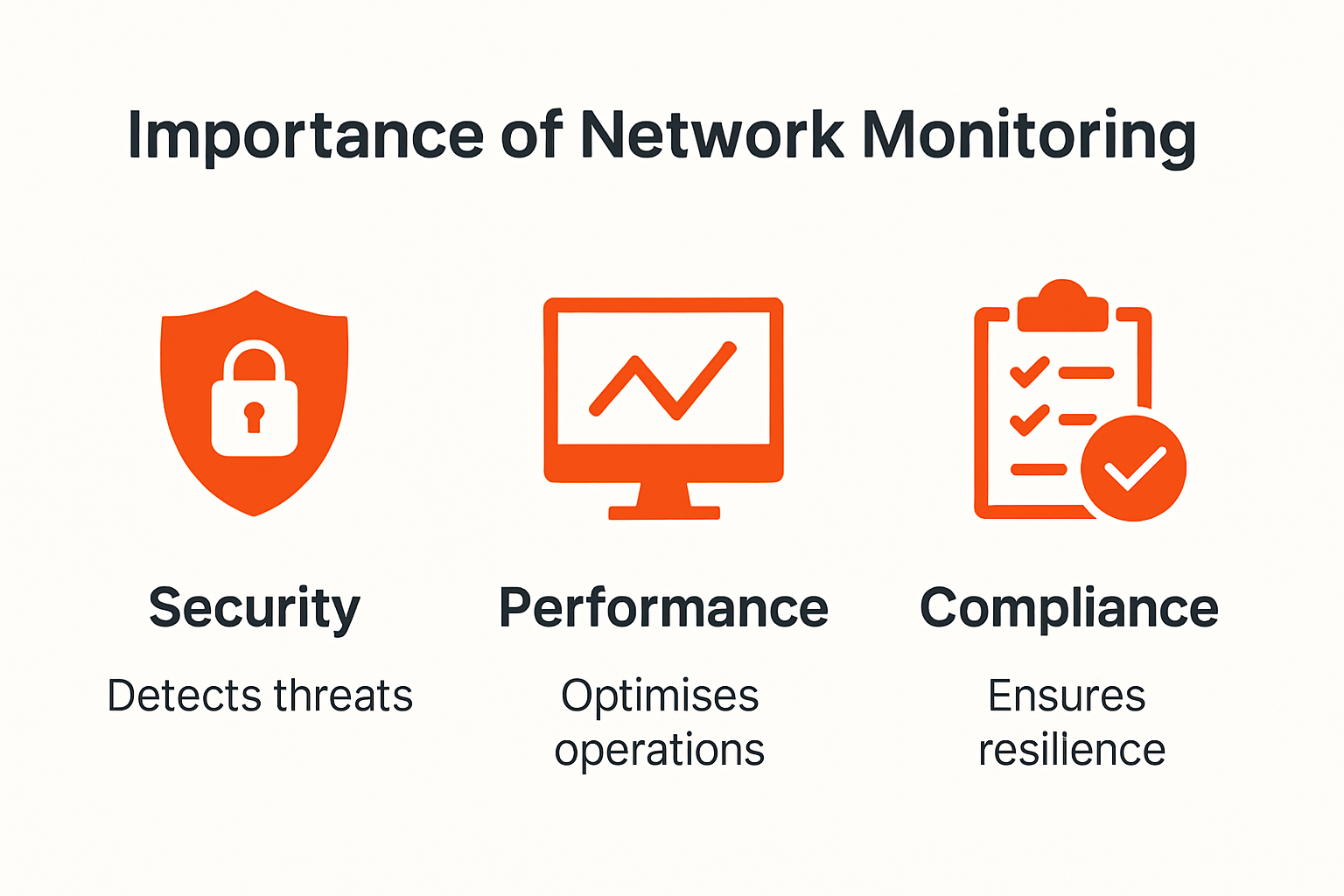
In the rapidly evolving digital ecosystem, network monitoring has transformed from a technical luxury to a critical business survival strategy. Businesses face unprecedented technological vulnerabilities that demand sophisticated, proactive surveillance of their digital infrastructure.
The Rising Threat Landscape for Business Networks
Modern organizations confront an increasingly complex cyber threat environment. Research from the Council for Scientific and Industrial Research (CSIR) revealed a stark reality: only 41% of South African organizations assess and monitor cyber threats daily. This statistic exposes a massive security gap that leaves businesses vulnerable to potential catastrophic network breaches.
The consequences of inadequate network monitoring extend far beyond simple inconvenience. Cybercriminals continuously develop more sophisticated methods to exploit network vulnerabilities, targeting businesses of all sizes and across multiple industries. From financial service providers to engineering firms, no sector remains immune to these evolving threats.
Economic and Operational Implications of Network Monitoring
Network monitoring represents more than just a defensive mechanism. It is a strategic investment that directly impacts operational efficiency and financial stability. According to Kaspersky’s cybersecurity report, 97% of South African businesses experienced adversaries attempting to infiltrate their networks in 2024. This staggering statistic underscores the urgent need for comprehensive network monitoring solutions.
Effective network monitoring provides businesses with several critical advantages:
- Real-time Threat Detection: Immediate identification of potential security breaches before they escalate
- Performance Optimization: Continuous tracking of network performance and resource allocation
- Compliance Management: Ensuring adherence to industry-specific regulatory requirements
- Cost Reduction: Preventing expensive data breaches and minimizing potential downtime
Businesses that invest in robust network monitoring demonstrate a commitment to technological resilience. They protect not just their digital assets but also their reputation, customer trust, and long-term operational sustainability. By implementing sophisticated monitoring strategies, organizations can transform potential vulnerabilities into strategic strengths.
Moreover, network monitoring is no longer a reactive measure but a proactive business strategy. It enables companies to anticipate potential issues, optimize resource allocation, and maintain a competitive edge in an increasingly digital marketplace. Decision-makers who understand this fundamental shift will position their organizations for sustainable growth and technological adaptability.
The message is clear: network monitoring is not optional. It is an essential component of modern business strategy that directly impacts operational efficiency, security, and organizational resilience.
Here’s a table that summarizes the key benefits of network monitoring highlighted in this section:
| Benefit | Description |
|---|---|
| Real-time Threat Detection | Immediate detection of security breaches before they escalate |
| Performance Optimization | Continuous tracking and improvement of network performance and resource allocation |
| Compliance Management | Ensures businesses meet regulatory requirements across various industries |
| Cost Reduction | Prevents data breaches, reducing downtime and associated costs |
| Operational Sustainability | Enhances ability to maintain long-term secure and efficient operations |
Protecting Data and Preventing Cyber Threats
In the digital age, data protection and cyber threat prevention have become paramount for organizational survival. Businesses must recognize that cybersecurity is not merely a technical requirement but a fundamental business strategy that safeguards critical assets, reputation, and operational continuity.
Understanding the Cyber Threat Ecosystem
Research from the Council for Scientific and Industrial Research (CSIR) highlights the critical nature of cybersecurity, revealing that South Africa experiences over 20 million cyber security threats per month. This staggering statistic underscores the complex and dynamic threat environment businesses must navigate.
Cyber threats have evolved far beyond simple malware attacks. Modern adversaries employ sophisticated techniques including social engineering, advanced persistent threats, and targeted ransomware campaigns. Organizations must develop comprehensive strategies that go beyond traditional defensive mechanisms.
Strategic Approaches to Data Protection
According to the KwaZulu-Natal Department of Public Works cybersecurity training insights, creating a culture of cybersecurity consciousness is crucial. This involves more than technological solutions it requires holistic organizational transformation.
Key strategic approaches include:
- Continuous Employee Training: Developing robust cybersecurity awareness programs
- Multi-Layered Security Frameworks: Implementing comprehensive protection strategies
- Regular Vulnerability Assessments: Proactively identifying and addressing potential weaknesses
- Incident Response Planning: Creating clear protocols for managing potential security breaches
Businesses must recognize that data protection extends beyond immediate technical interventions. It involves creating resilient systems that can adapt to emerging threats. Learn more about emerging security technologies that can enhance your organization’s defensive capabilities.
The financial implications of inadequate cyber protection are substantial. A single data breach can result in significant economic losses, regulatory penalties, and irreparable reputational damage. The Gauteng Department of e-Government’s substantial R1.7 billion budget allocation for cybersecurity demonstrates the strategic importance of robust digital defense mechanisms.
Effective data protection requires a proactive, dynamic approach that combines technological solutions, human expertise, and continuous learning. Organizations must view cybersecurity as an ongoing process of adaptation and improvement, not a static set of technical controls.
Boosting Performance and Reducing Downtime
Network monitoring transcends security. It is a powerful mechanism for optimizing organizational performance, ensuring operational continuity, and minimizing costly interruptions that can cripple business productivity.
The Hidden Cost of Network Inefficiencies
Research from the Auditor-General of South Africa reveals a stark reality: 62% of audited entities have inadequate or ineffective disaster recovery capabilities. This statistic underscores the critical importance of robust network performance management.
Network downtime is not just a technical inconvenience. It represents substantial financial losses, eroded customer trust, and potential long-term reputational damage. Organizations that fail to implement comprehensive network monitoring strategies risk significant operational disruptions.
Strategic Performance Optimization
According to research published in Acta Structilia, infrastructure performance is directly linked to consistent monitoring and proactive maintenance. Network monitoring enables businesses to:
- Predictive Maintenance: Identify potential system failures before they occur
- Resource Allocation: Optimize network bandwidth and computing resources
- Performance Benchmarking: Continuously measure and improve network efficiency
- Real-time Diagnostics: Quickly diagnose and resolve performance bottlenecks
Effective network monitoring transforms technical infrastructure from a potential liability into a strategic competitive advantage. Explore our comprehensive network monitoring solutions to understand how advanced technologies can revolutionize your operational performance.
Proactive Management Strategies
Research from the University of Pretoria highlights the critical importance of developing comprehensive cybersecurity and performance management strategies. This involves more than technological implementation it requires a holistic approach that integrates people, processes, and technology.
Businesses must recognize that network performance is not a static condition but a dynamic ecosystem requiring continuous attention. By implementing advanced monitoring tools and developing a culture of proactive management, organizations can significantly reduce downtime, improve operational efficiency, and create more resilient technological infrastructures.
The future of business success lies in understanding and leveraging network performance as a strategic asset. Network monitoring is no longer an optional technical function but a fundamental component of organizational strategy and competitive differentiation.
The following table compares the effects of inadequate vs. effective network monitoring on business operations:
| Aspect | Inadequate Network Monitoring | Effective Network Monitoring |
|---|---|---|
| Downtime Risk | High; frequent interruptions | Low; minimized through proactive detection |
| Financial Impact | Greater losses due to disruptions | Reduced costs, optimized use of resources |
| Customer Trust | Erodes with repeated failures | Strengthens through consistent service |
| Disaster Recovery | Often inadequate | Robust, with proactive planning |
| Performance | Unpredictable, hard to benchmark | Continuously measured and improved |
Supporting Compliance and Business Continuity
In the complex regulatory environment of modern business, network monitoring emerges as a critical tool for ensuring compliance, maintaining operational resilience, and protecting organizational integrity. Compliance is no longer a checkbox exercise but a strategic imperative that demands sophisticated technological support.
Regulatory Landscape and Compliance Challenges
Research from the Journal of Economic and Financial Sciences reveals a significant challenge: inadequate cybersecurity awareness among financial professionals increases organizational vulnerability. This underscores the critical need for comprehensive network monitoring strategies that go beyond technical implementation.
Businesses across various sectors face increasingly stringent regulatory requirements. Financial services, healthcare, and engineering firms must maintain rigorous documentation, ensure data privacy, and demonstrate robust security protocols. Network monitoring provides the technological foundation for meeting these complex compliance demands.
Strategic Compliance Management
According to the South African Institute of Chartered Accountants, implementing Managed Security Operations Centres (MSOCs) represents a proactive approach to preventing security incidents and supporting business resilience.
Key compliance and continuity strategies include:
- Continuous Audit Trails: Automatically documenting network activities and access
- Real-time Reporting: Generating immediate compliance documentation
- Incident Documentation: Comprehensive logging of potential security events
- Regulatory Evidence Collection: Creating transparent, verifiable security records
Learn more about building robust service agreements that support comprehensive compliance frameworks.
Business Continuity and Operational Resilience
A study in The African Journal of Information and Communication examining cyber vulnerabilities demonstrates how inadequate network monitoring can catastrophically disrupt business operations. The research highlights that network monitoring is not just a technical function but a critical business continuity strategy.
Effective network monitoring enables organizations to:
- Predict potential system failures
- Minimize operational disruptions
- Maintain consistent service delivery
- Protect critical business data and infrastructure
Businesses must view network monitoring as an investment in organizational resilience. It provides a dynamic, adaptive approach to managing technological risks, ensuring that compliance is not a burden but a strategic advantage.
In an era of increasing regulatory complexity and technological uncertainty, network monitoring stands as a crucial mechanism for maintaining business continuity, protecting organizational assets, and demonstrating unwavering commitment to operational excellence.
Frequently Asked Questions
What is network monitoring and why is it important for businesses?
Network monitoring is the continuous oversight of a computer network to ensure its optimal performance and security. It is crucial for businesses as it helps detect cyber threats in real time, optimizes resource allocation, reduces downtime, and ensures compliance with regulatory standards, ultimately safeguarding the business’s digital assets.
How can network monitoring help prevent cyber threats?
Network monitoring can prevent cyber threats by providing real-time threat detection and alerts for suspicious activities. It allows businesses to implement a multi-layered security approach, continuously assess vulnerabilities, and respond promptly to any incidents, reducing the risk of data breaches and cyberattacks.
What are the economic benefits of investing in network monitoring?
Investing in network monitoring can lead to significant economic benefits, including cost reductions associated with minimizing downtime, preventing data breaches, and enhancing operational efficiency. It also helps maintain customer trust and protects the organization’s reputation, contributing to long-term business sustainability.
How does network monitoring support compliance requirements for businesses?
Network monitoring supports compliance by ensuring continuous audit trails, providing real-time reporting for regulatory documentation, and maintaining comprehensive logs of network activities. This helps organizations demonstrate adherence to industry regulations, thereby avoiding potential penalties and reinforcing their commitment to operational excellence.
Elevate Your Business Security with Managed Network Monitoring
Are you worried about unseen cyber threats disrupting your business? As highlighted in this guide, cyberattacks are both frequent and increasingly sophisticated, putting your data and daily operations at risk. Many professional firms still believe that antivirus and firewalls are enough, but the reality is that gaps in monitoring can lead to real financial and reputational damage. With downtime, compliance failures, and lost client trust all possible when security fails, investing in proactive network monitoring has never been more important for ambitious businesses in South Africa.

Now is the time to take control of your IT environment. With Techtron’s managed IT services, you get real-time network monitoring and tailored cybersecurity support built around your risk profile. Reduce technical burdens, ensure compliance, and keep your digital assets safe with an experienced partner that understands the challenges facing engineering and financial firms. Don’t let blind spots put your company at risk—visit https://techtron.co.za today to see how our solutions can help your business thrive. Connect with us now to protect your growth and gain peace of mind.