

Understanding Secure Mobile Device Management for Businesses
More South African businesses are relying on mobile phones and tablets for daily operations. You might expect that having these devices boosts efficiency and opens new ways to work. But the real surprise is how much risk comes with all that convenience. Mobile devices account for almost 40 percent of potential security breaches in companies, according to IBM. The irony is that the very tech driving productivity can also be your company’s weakest link.
Table of Contents
- What Is Secure Mobile Device Management?
- Why Is Secure Mobile Device Management Important?
- How Secure Mobile Device Management Works
- Key Concepts In Secure Mobile Device Management
Quick Summary
| Takeaway | Explanation |
|---|---|
| Implement robust device enrollment | Enroll devices with unique identifiers to ensure proper authentication and registration. |
| Standardise security policy enforcement | Consistently apply access controls and protection protocols across all devices to minimise vulnerabilities. |
| Utilise remote management capabilities | Enable remote data wiping and monitoring to protect sensitive corporate data in case of loss or theft. |
| Focus on compliance with industry regulations | Align mobile management strategies with regulatory standards to avoid penalties and ensure data safety. |
| Adapt to changing security needs | Develop strategies that can dynamically respond to new security threats in the evolving technological landscape. |
What is Secure Mobile Device Management?
Secure mobile device management represents a comprehensive approach to controlling, monitoring, and protecting mobile devices within an organisational technology ecosystem. At its core, secure mobile device management (MDM) enables businesses to manage smartphones, tablets, and other mobile devices used by employees, ensuring data security and operational efficiency.
Core Components of Mobile Device Management
Mobile device management goes beyond simple device tracking. It involves a sophisticated framework of technological strategies designed to address the complex challenges of modern workplace mobility. Understanding mobile device security policies reveals the intricate layers of protection required in contemporary business environments.
The fundamental components of secure mobile device management include:
- Device Enrollment: Establishing a systematic process for registering and authenticating company devices
- Configuration Management: Standardising device settings across organisational networks
- Security Policy Enforcement: Implementing and maintaining strict access controls and data protection protocols
Risk Mitigation and Compliance
In an increasingly complex digital landscape, secure mobile device management serves as a critical defence mechanism against potential cybersecurity threats. According to Gartner’s Mobile Security Research, organisations implementing robust MDM strategies can reduce potential security breaches by up to 60%.
Businesses must recognize that mobile devices represent significant potential vulnerabilities. By implementing comprehensive mobile device management solutions, companies can:
- Protect sensitive corporate data from unauthorized access
- Remotely wipe devices in case of loss or theft
- Ensure compliance with industry-specific regulatory requirements
- Maintain a consistent and secure technological environment
The strategic implementation of secure mobile device management transforms mobile technology from a potential risk into a controlled, productive business asset.
To clarify the essential elements of secure mobile device management, the table below summarises the core components and their main functions within a business environment.
| Component | Main Function |
|---|---|
| Device Enrollment | Registers and authenticates devices to the organisational system |
| Configuration Management | Standardises device settings and ensures consistent configurations |
| Security Policy Enforcement | Applies and maintains strict access controls and protection protocols |
| Remote Data Wiping | Enables deletion of sensitive corporate data if a device is lost or stolen |
| Compliance Management | Aligns device management practices with regulatory and security standards |
| Device Monitoring | Continually observes devices for security and operational status |
Why is Secure Mobile Device Management Important?
Secure mobile device management has become critically important as businesses increasingly rely on mobile technologies to drive productivity, collaboration, and operational flexibility. The proliferation of smartphones, tablets, and portable devices has fundamentally transformed how organisations conduct business, creating both unprecedented opportunities and significant cybersecurity challenges.
Protecting Sensitive Corporate Data
In an era of constant digital connectivity, mobile devices represent significant potential entry points for cybersecurity threats. What is BYOD and does it benefit your business highlights the complex landscape of personal and professional device usage. Businesses must recognize that each mobile device connected to their network potentially carries substantial risk.
The critical importance of secure mobile device management becomes evident through several key considerations:
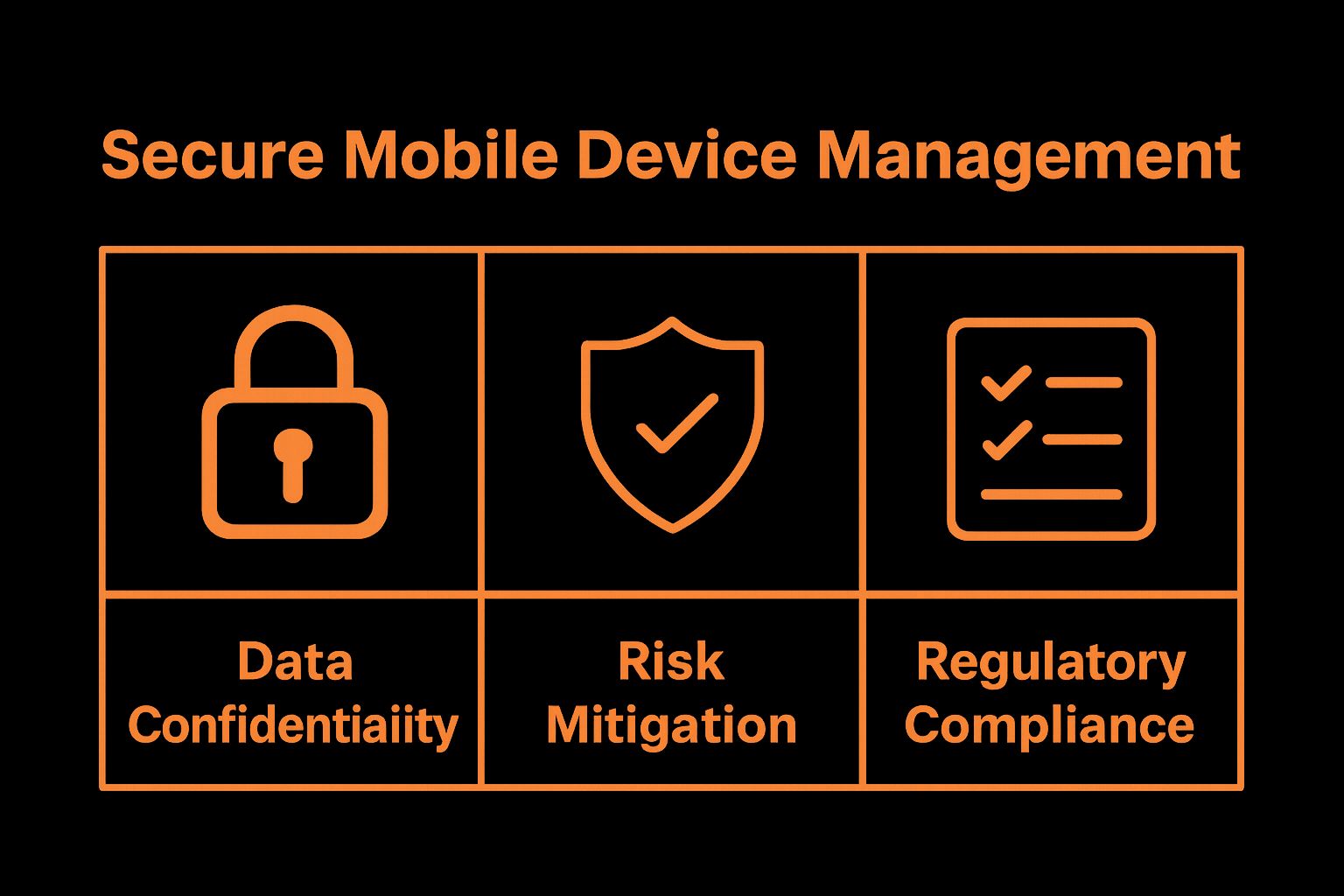
- Data Confidentiality: Preventing unauthorized access to sensitive corporate information
- Risk Mitigation: Reducing potential vulnerabilities from lost or compromised devices
- Regulatory Compliance: Maintaining alignment with industry-specific security standards
Comprehensive Security and Operational Control
According to IBM’s Cyber Resilience Report, mobile devices contribute to approximately 40% of potential security breaches in corporate environments. Secure mobile device management provides organisations with comprehensive tools to:
- Monitor and control device access
- Implement uniform security protocols
- Remotely manage and secure corporate data
- Separate personal and professional digital environments
By establishing robust mobile device management strategies, businesses transform potential technological vulnerabilities into controlled, secure, and productive assets. The investment in comprehensive mobile security is not merely a technical requirement but a strategic imperative for modern organisations seeking to protect their digital infrastructure and maintain operational integrity.
The following table provides a concise overview of key statistics and facts related to mobile device security in South African businesses as highlighted in the article.
| Statistic / Fact | Value / Description |
|---|---|
| Corporate security breaches from mobile devices | Around 40% (IBM) |
| Breach reduction with robust MDM strategies | Up to 60% (Gartner) |
| Importance of compliance | Needed to avoid penalties and ensure data safety |
| Role of remote wiping | Protects data in the event of loss or theft |
| Business value of secure MDM | Transforms devices from risk into controlled, productive assets |
How Secure Mobile Device Management Works
Secure mobile device management operates through a sophisticated technological framework that enables comprehensive control, monitoring, and protection of mobile devices within an organisational ecosystem. The process involves multiple interconnected layers of technological strategy and implementation.
Device Enrollment and Authentication
The initial stage of mobile device management begins with a structured device enrollment process. Our security strategies emphasize the critical importance of establishing a robust authentication mechanism that verifies and registers each device before granting network access.
Device enrollment typically involves several key steps:
- Unique Device Registration: Assigning a distinct digital identifier to each mobile device
- Credential Validation: Confirming the identity of the device and its primary user
- Policy Configuration: Automatically applying organisational security settings
Technical Implementation and Control Mechanisms
According to Cisco’s Mobile Security Report, effective mobile device management relies on advanced software platforms that provide granular control over device functionality and data access.
The core technical implementation includes:
- Establishing secure communication channels
- Implementing multi-factor authentication protocols
- Creating segmented network access controls
- Enabling remote device monitoring and management
These sophisticated control mechanisms allow organisations to maintain strict oversight of mobile devices, ensuring that corporate data remains protected while enabling employee productivity and technological flexibility. By integrating advanced security protocols with user-friendly management interfaces, secure mobile device management transforms potential technological vulnerabilities into controlled, secure digital environments.
Key Concepts in Secure Mobile Device Management
Secure mobile device management encompasses a complex array of technological principles and strategic approaches designed to protect organisational digital assets. Understanding these fundamental concepts is crucial for businesses seeking to implement robust mobile security frameworks.
Device Management and Access Control
Emerging security technologies are transforming how organisations approach mobile device protection. At the core of secure mobile device management lie critical concepts that define how devices are monitored, controlled, and secured.
Key foundational concepts include:
- Network Segmentation: Isolating mobile devices within controlled digital environments
- Contextual Access: Granting device permissions based on user location, time, and device status
- Adaptive Security: Dynamic security protocols that respond to changing technological landscapes
Technological Frameworks and Policy Implementation
According to Gartner’s Mobile Security Research, effective mobile device management relies on sophisticated technological frameworks that integrate multiple security layers.
Critical technological components encompass:
- Endpoint protection mechanisms
- Encryption protocols for data transmission
- Comprehensive device lifecycle management
- Continuous security monitoring and threat detection
These interconnected concepts create a holistic approach to mobile device security, enabling businesses to protect sensitive information while maintaining operational flexibility. By understanding and implementing these key concepts, organisations can develop resilient mobile device management strategies that adapt to evolving technological challenges and potential cybersecurity threats.

Take Control of Your Mobile Security with Trusted IT Support
Are you feeling the pressure of managing multiple mobile devices in your business? As highlighted in our article, unprotected smartphones and tablets can leave your company wide open to data breaches, compliance failures, and operational setbacks. With threats on the rise and remote work becoming the norm, secure mobile device management is no longer just a technical add-on. It is now a strategic necessity for growing firms in demanding sectors like engineering and finance.
At Techtron, we specialise in helping medium to large businesses transform their mobile device management from a frustrating vulnerability into a business strength. Our proactive IT solutions combine tailored device management, expert cybersecurity, and full network security with transparent support. If you want to see how professional managed IT services can strengthen your security while removing stress from your team, do not wait. Visit Techtron today and take the next step towards seamless, worry-free mobile security for your business.
Frequently Asked Questions
What is secure mobile device management (MDM)?
Secure mobile device management (MDM) is a comprehensive approach that allows businesses to control, monitor, and protect mobile devices such as smartphones and tablets used by employees, ensuring data security and operational efficiency.
Why is secure mobile device management important for businesses?
Secure MDM is crucial as it safeguards sensitive corporate data from unauthorized access, reduces vulnerabilities from lost or compromised devices, and ensures compliance with industry-specific regulations, transforming mobile technology into productive business assets.
How does secure mobile device management work?
Secure MDM operates through a structured process that includes device enrollment and authentication, configuration management, and security policy enforcement, allowing organisations to have strict control over mobile devices while ensuring data protection and productivity.
What are the core components of secure mobile device management?
The fundamental components of secure MDM include device enrollment, configuration management, and security policy enforcement, each contributing to a comprehensive framework that protects mobile devices within the organisation.