

Digital Transformation Strategies: Complete Guide
Almost 70 percent of digital transformation projects fall short of their goals, leaving businesses grappling with missed opportunities and wasted investments. In an era where technology shapes every aspect of competition and growth, understanding what truly drives digital transformation has never mattered more. Clear strategies and strong leadership are vital for any organization hoping to stay ahead, and knowing how to define and implement digital transformation is the first step toward real, lasting progress.
Key Takeaways
| Point | Details |
|---|---|
| Comprehensive Approach | Digital transformation requires aligning technological investments with core business objectives and fostering a cultural shift toward innovation. |
| Strategic Initiatives | Key focus areas include process, business model, cultural, and technology infrastructure transformations to improve efficiency and visibility. |
| Mitigation of Risks | Address risks like strategic misalignment and workforce skill gaps through effective change management and cybersecurity measures. |
| Partnerships | Collaborating with managed IT service providers can enhance capabilities in data management and technology implementation, ensuring operational efficiency. |
Defining Digital Transformation Strategies
Digital transformation represents a comprehensive strategic redesign of how businesses leverage technology to fundamentally reimagine their operational processes, customer experiences, and competitive positioning. According to research from sajbm.org, this process is particularly critical in sectors like manufacturing, where strategic leadership must develop robust models for integrating digital capabilities.
At its core, digital transformation is not merely about implementing new technologies, but creating a holistic approach that aligns technological investments with core business objectives. The pure.uj.ac.za research emphasizes that successful digital transformation requires:
- Strategic alignment between digital initiatives and business goals
- Effective change management processes
- Comprehensive understanding of organizational capabilities
- Clear roadmaps for technological integration
Successful digital transformation strategies demand more than technological adoption. They require a cultural shift that empowers organizations to:
- Embrace continuous innovation
- Foster digital literacy across all organizational levels
- Create adaptive, flexible technological infrastructures
- Develop data-driven decision-making capabilities
By approaching digital transformation as a strategic journey rather than a technical implementation, businesses can unlock sustainable competitive advantages and create more resilient, responsive operational models.

Key Types of Digital Transformation Initiatives
Digital transformation encompasses a wide range of strategic initiatives designed to leverage technology for comprehensive organizational improvement. According to research from sajbm.org, key digital transformation initiatives in sectors like manufacturing increasingly focus on adopting advanced technologies such as cloud computing, machine learning, and artificial intelligence to enhance decision-making and operational efficiency.
The primary types of digital transformation initiatives can be categorized into several critical domains:
- Process Transformation: Redesigning internal workflows and operational procedures using digital technologies
- Business Model Transformation: Fundamentally reimagining how value is created and delivered to customers
- Cultural Transformation: Shifting organizational mindsets to embrace digital innovation and continuous learning
- Technology Infrastructure Transformation: Modernizing technological capabilities and systems
Research from pure.uj.ac.za highlights specific objectives of these initiatives, which include:
- Achieving total business visibility through integrated digital platforms
- Automating non-value-adding activities to improve productivity
- Digitizing core business processes for enhanced efficiency
- Enabling data-driven decision-making across organizational levels
For organizations seeking to navigate these transformative strategies, understanding digital transformation trends can provide critical insights into emerging technologies and strategic approaches that drive meaningful digital evolution.
Core Components and Success Factors
Successful digital transformation requires a strategic blend of technological capabilities, leadership vision, and organizational adaptability. According to research from sajbm.org, core components critically include data management, leadership skills, and the strategic positioning of the Chief Information Officer in driving digital initiatives across organizational structures.
The fundamental success factors for digital transformation can be categorized into several key areas:
- Strategic Alignment: Ensuring digital initiatives directly support core business objectives
- Leadership Commitment: Developing a clear vision and persistent support from top management
- Technological Infrastructure: Building robust, flexible digital ecosystems
- Talent Development: Cultivating digital skills and fostering a culture of continuous learning
- Change Management: Creating adaptive processes that support technological transitions
Research from pure.uj.ac.za emphasizes that effective digital transformation is not simply about implementing new technologies, but about creating a holistic approach that encompasses:
- Comprehensive organizational alignment
- Systematic change management processes
- Continuous skill development
- Agile technological integration
To gain deeper insights into navigating these complex transformation strategies, businesses can explore digital transformation trends that provide cutting-edge perspectives on emerging technological approaches and organizational adaptation methodologies.
Implementation Processes for Mid-Sized Firms
Digital transformation for mid-sized firms demands a structured yet flexible approach that balances technological innovation with organizational capabilities. Research from sajbm.org highlights that successful implementation critically depends on leadership’s strategic role and effective data management in driving digital initiatives across organizational structures.
The implementation process for mid-sized firms typically involves a systematic approach:
- Assessment Phase: Comprehensive evaluation of existing technological infrastructure
- Strategy Development: Creating a tailored digital transformation roadmap
- Resource Allocation: Identifying and securing necessary technological and human resources
- Pilot Implementation: Testing digital initiatives in controlled environments
- Scaled Deployment: Gradual rollout across organizational departments
According to pure.uj.ac.za, successful implementation requires careful alignment of digital initiatives with core business objectives. Key implementation steps include:
- Conducting a thorough organizational digital readiness assessment
- Developing a clear, measurable digital transformation strategy
- Creating cross-functional implementation teams
- Establishing continuous monitoring and adaptation mechanisms
For mid-sized firms seeking detailed guidance, understanding digital transformation trends can provide additional insights into navigating complex technological transitions while maintaining operational efficiency and competitive advantage.
Common Risks and Mitigation Approaches
Digital transformation presents complex challenges that can significantly derail organizational progress if not carefully managed. Research from sajbm.org highlights critical risks such as inadequate leadership skills and poor data management, which can fundamentally undermine digital transformation efforts in organizational contexts.
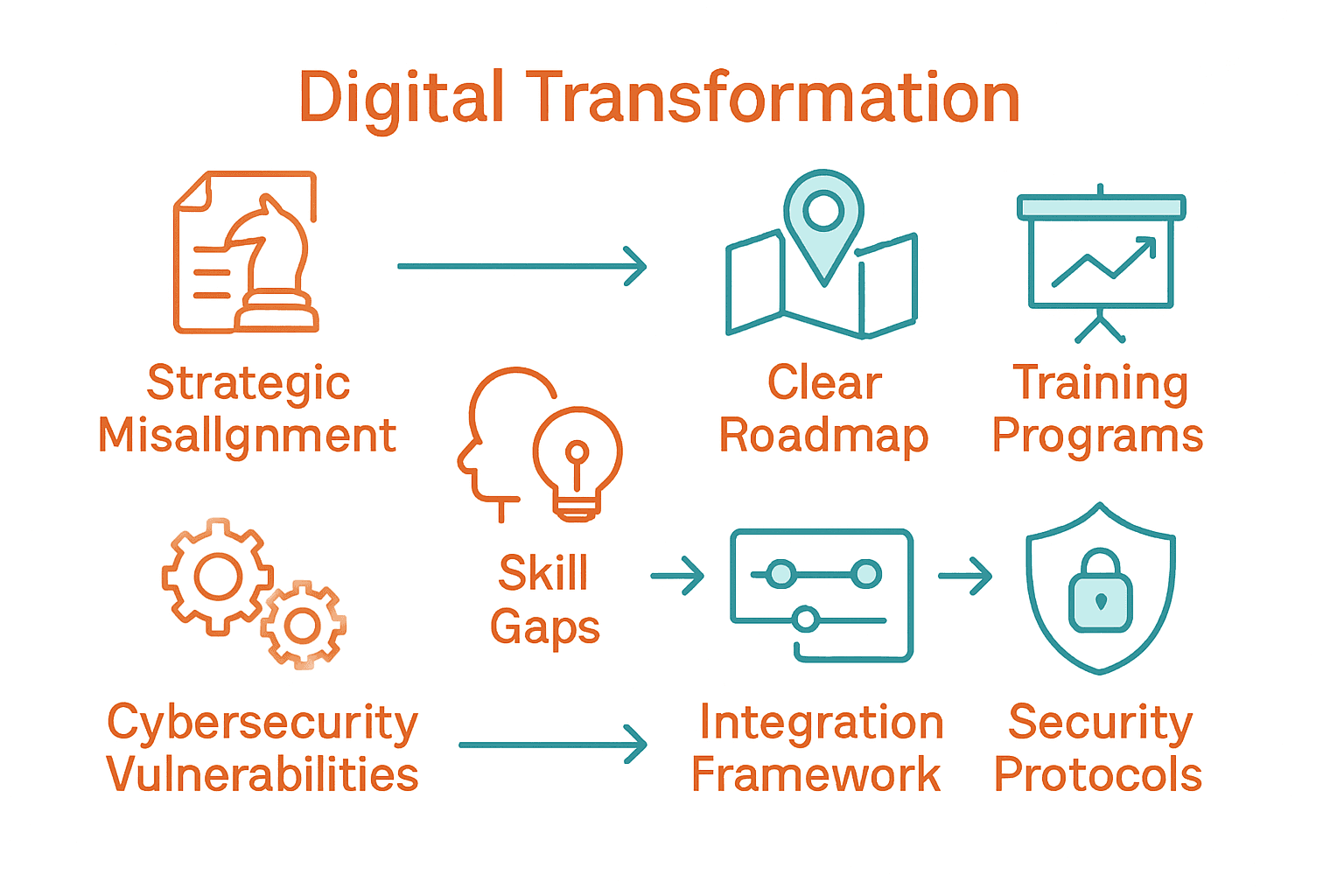
The most prevalent risks in digital transformation include:
- Strategic Misalignment: Implementing technologies without clear business objectives
- Technology Integration Challenges: Incompatibility between existing and new systems
- Skill Gap: Insufficient digital capabilities within the current workforce
- Cultural Resistance: Organizational reluctance to embrace technological changes
- Cybersecurity Vulnerabilities: Increased exposure to digital security threats
According to pure.uj.ac.za, effective mitigation approaches require comprehensive strategies that address both technological and human factors. Key mitigation strategies include:
- Developing a clear digital transformation roadmap
- Investing in continuous employee skill development
- Establishing robust change management processes
- Implementing comprehensive cybersecurity measures
Businesses can gain additional insights by exploring IT risk management strategies, which provide a structured approach to identifying and mitigating potential digital transformation challenges.
Partnering With Managed IT Service Providers
Managed IT service providers play a crucial role in accelerating digital transformation for businesses seeking specialized technological expertise. Research from sajbm.org reveals that strategic partnerships can provide critical support in data management and technology implementation, particularly for organizations with limited internal technological capabilities.
The key advantages of partnering with managed IT service providers include:
- Strategic Technology Expertise: Access to specialized knowledge and cutting-edge technological insights
- Cost-Effective Solutions: Reducing overhead associated with maintaining full-time IT staff
- Scalable Infrastructure: Flexible technological resources that adapt to business growth
- Proactive Security Management: Continuous monitoring and protection against emerging cyber threats
- Operational Efficiency: Streamlining technological processes and minimizing disruptions
According to pure.uj.ac.za, effective managed service partnerships are crucial for achieving comprehensive business visibility and automating critical organizational processes. Successful partnerships typically involve:
- Comprehensive initial technology assessment
- Customized digital transformation roadmapping
- Continuous technological support and optimization
- Regular performance and security reviews
For businesses looking to make an informed decision, choosing the right managed service provider can be a critical step in ensuring successful digital transformation and technological integration.
Transform Your Business with Expert Digital Strategies
Navigating digital transformation can feel overwhelming when facing challenges like strategic misalignment, skill gaps, or complex technology integration. This article highlights key pain points such as the need for strategic leadership, robust data management, and cultural shifts to drive continuous innovation. These are not just technical tasks but critical business priorities that demand expert guidance and proven solutions.
At Techtron, we understand these hurdles and offer tailored managed IT services that empower you to overcome them confidently. From comprehensive IT management and cloud solutions to proactive cybersecurity and disaster recovery, our services align perfectly with your digital transformation goals. Explore how digital transformation trends can reshape your operations and learn the best approach for choosing the right managed service provider to keep your business secure and agile.
Ready to reduce technical burdens and accelerate your transformation journey today Visit Techtron for expert support designed to keep your business resilient secure and future-ready.
Frequently Asked Questions
What is digital transformation?
Digital transformation is a strategic redesign of how businesses leverage technology to improve operational processes, enhance customer experiences, and strengthen competitive positioning.
What are the key benefits of implementing digital transformation strategies?
Key benefits include improved operational efficiency, enhanced decision-making through data insights, greater agility in adapting to market changes, and the creation of new business models that deliver more value to customers.
How can mid-sized firms effectively implement digital transformation?
Mid-sized firms can implement digital transformation by conducting a thorough assessment of their existing technologies, developing a tailored transformation strategy, allocating necessary resources, and gradually deploying initiatives while constantly monitoring progress.
What are common risks associated with digital transformation?
Common risks include strategic misalignment between technology and business goals, integration challenges with existing systems, skill gaps in the workforce, cultural resistance to change, and increased cybersecurity vulnerabilities.