

How to Secure Business Data for Reliable IT Protection
Nearly half of south-african organisations reported facing one to five cybersecurity incidents last year, highlighting how frequent data breaches have become. With digital threats multiplying and regulations tightening, protecting business data is now a vital challenge for every south-african company. This guide walks you through practical steps to assess your risks, implement strong safeguards, and keep your information secure in a rapidly changing cyber environment.
Quick Summary
| Key Point | Explanation |
|---|---|
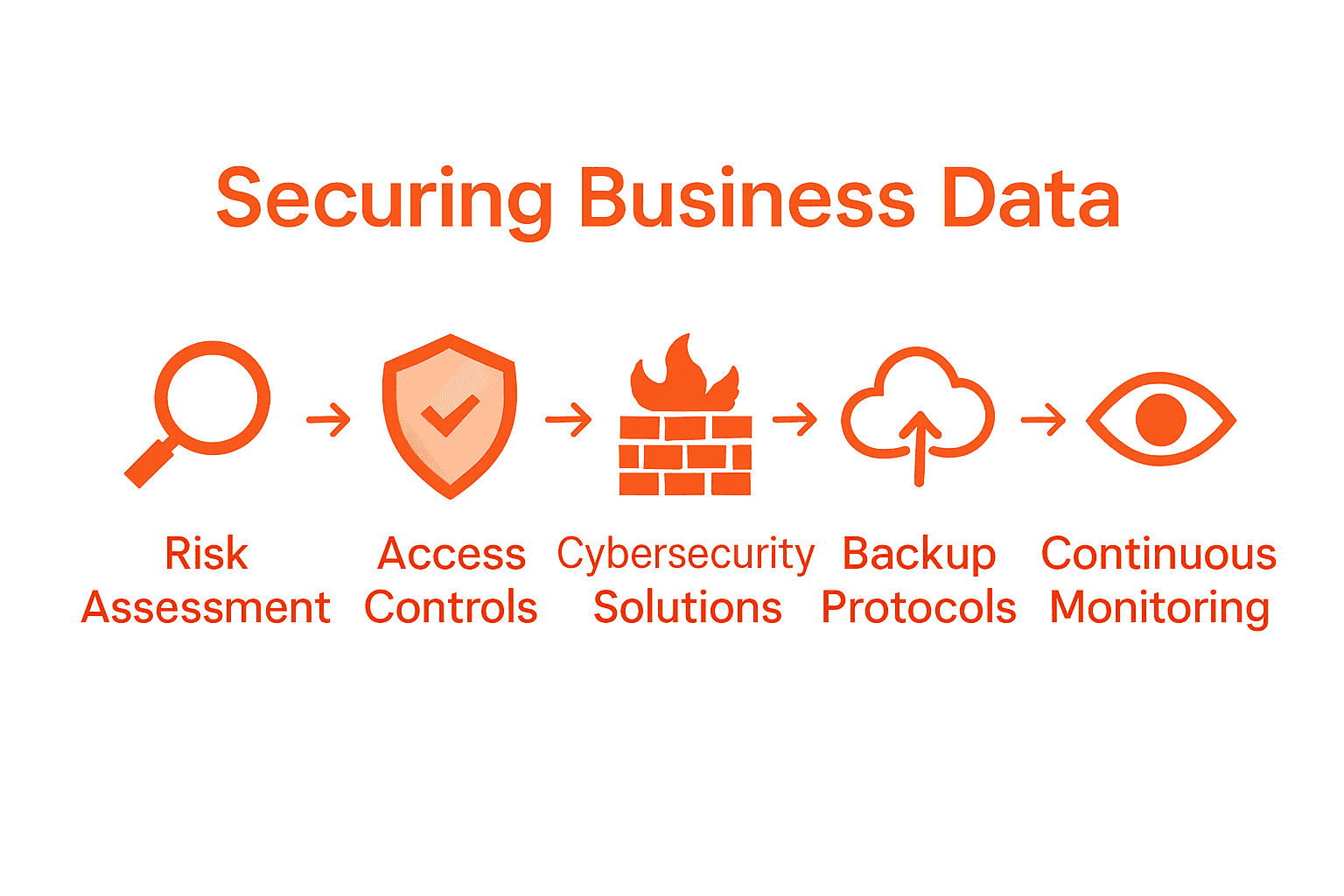
| 1. Assess data security risks thoroughly | Conduct a detailed audit of technology systems and data practices to identify existing vulnerabilities. This is crucial before implementing protection strategies. |
| 2. Implement strong access controls | Establish clear user roles with granular permissions and multifactor authentication to minimize security breaches within your organisation. |
| 3. Deploy advanced cybersecurity technologies | Integrate multilayered security systems and real-time monitoring to proactively defend against evolving cyber threats and vulnerabilities. |
| 4. Establish secure data backup protocols | Develop multiple layered backup strategies using both cloud and physical storage to ensure business continuity and safeguard against data loss. |
| 5. Regularly test and monitor security measures | Employ continuous assessment through penetration tests and real-time monitoring to ensure ongoing effectiveness of your cybersecurity infrastructure. |
Step 1: Assess current data security risks
Identifying potential vulnerabilities in your business data infrastructure requires a systematic and thorough approach. Your goal is to comprehensively map out existing security risks before developing targeted protection strategies.
Start by conducting a detailed internal audit of your current technology systems and data management practices. According to the CSIR, 47% of South African organisations experienced 1 to 5 cybersecurity incidents in the past year, with malware and phishing representing the most prevalent threats. This statistic underscores the critical importance of proactive risk assessment.
To effectively assess your data security risks, implement these key steps:
- Review all hardware and software systems for potential entry points
- Analyse user access permissions and authentication protocols
- Examine network configurations and potential external connection vulnerabilities
- Document all current security measures and their effectiveness
- Identify historical incidents or near misses in your organisational infrastructure
A comprehensive risk assessment tool can help streamline this process, providing structured guidance for identifying potential weaknesses. Pay special attention to areas like user permissions, network traffic patterns, and potential human error points.
Warning: Do not underestimate the complexity of data security risks. As research from the Mail & Guardian highlights, only 28% of South African municipalities had implemented minimum data protection compliance requirements by mid 2023, demonstrating the widespread challenges in maintaining robust security standards.
Once you have completed your initial risk assessment, you will be prepared to move into the next critical phase: developing a targeted security mitigation strategy.
Step 2: Implement robust access controls
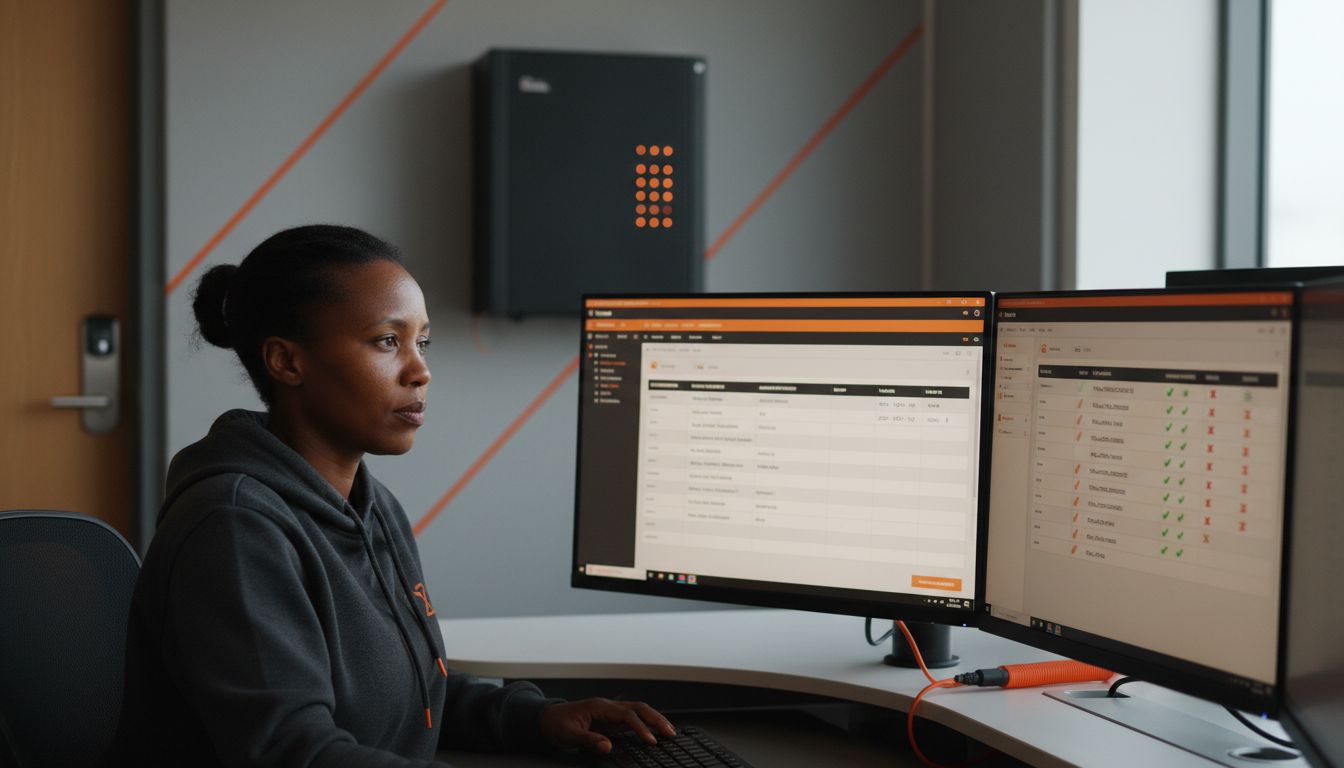
Securing your business data requires establishing comprehensive user authentication and permission protocols that limit potential security breaches. Your primary objective is to create a multilayered access management system that protects sensitive information while enabling efficient organisational workflows.
Research from ArXiv suggests advanced access control frameworks can significantly enhance security by implementing intelligent permission structures. Specifically, a distributed access control approach combining smart contracts and attribute based methodologies can provide more nuanced and reliable protection mechanisms.
To implement robust access controls, follow these strategic steps:
- Define clear user roles and permission levels
- Create granular access hierarchies within your organisation
- Implement multifactor authentication protocols
- Regularly audit and update user access credentials
- Develop comprehensive logging mechanisms to track system interactions
Carefully design your user access management strategy to ensure that employees have precisely the permissions required for their specific job functions. This principle of least privilege minimises potential internal security risks.
Warning: Never grant blanket administrative access. Each permission should be deliberately assigned and periodically reviewed to maintain optimal security integrity.
Once your access control framework is established, you will be prepared to develop advanced monitoring and tracking strategies to protect your organisational data ecosystem.
Step 3: Deploy advanced cybersecurity solutions
Protecting your business data requires strategic implementation of comprehensive cybersecurity technologies that can adapt to evolving digital threats. Your objective is to create a robust defensive infrastructure that proactively identifies and mitigates potential security vulnerabilities.
According to research from ArXiv, Africa faces significant cyber vulnerabilities, with South Africa being particularly susceptible to advanced cyber threats. This underscores the critical importance of deploying sophisticated cybersecurity solutions tailored to your organisational needs.
Implement these key strategies for advanced cybersecurity deployment:
- Integrate multilayered security systems
- Utilise advanced threat detection algorithms
- Implement real time monitoring and response mechanisms
- Deploy automated security patch management
- Establish comprehensive incident response protocols
The cybersecurity best practices guide recommends aligning your security approach with internationally recognised standards. The SAISAC advocates for frameworks like ISO 27001, which provide structured guidance for developing robust cybersecurity infrastructures.
Warning: Cybersecurity is not a one time implementation but a continuous process of adaptation and improvement. Regular assessments and updates are crucial to maintaining effective protection.
Once your advanced cybersecurity solutions are deployed, you will be prepared to establish ongoing monitoring and continuous improvement strategies for your organisational data protection.
Step 4: Establish secure data backup protocols
Protecting your organisation’s critical information requires developing a comprehensive and resilient data backup strategy that ensures business continuity and minimises potential data loss risks. Your primary goal is to create multiple layers of protection that safeguard your digital assets across different storage environments.
Research from the University of Pretoria emphasises the importance of establishing resilient information systems with robust backup protocols to mitigate potential cyber threats. As highlighted by ITWeb, effective data management strategies are crucial for protecting against potential breaches and compliance failures.
Implement these critical data backup protocols:
- Create multiple backup copies in different physical locations
- Use encrypted backup storage solutions
- Implement automatic backup scheduling
- Test backup restoration processes regularly
- Maintain offline backup copies for additional security
Your automated backup solutions should include comprehensive strategies that cover both cloud and physical storage options. Ensure your backup systems provide versioning capabilities to recover from potential ransomware attacks or accidental data modifications.
Warning: Never rely on a single backup method. Diversify your backup strategies and consistently verify the integrity of your stored data.
Once your secure data backup protocols are established, you will be prepared to develop comprehensive disaster recovery and business continuity plans.
Step 5: Test and monitor data security measures
Ensuring the ongoing effectiveness of your cybersecurity infrastructure requires systematic testing and continuous monitoring of your data protection strategies. Your primary objective is to proactively identify potential vulnerabilities and create a dynamic security environment that adapts to emerging threats.
Research from the South African Journal of Information Management emphasises the critical need for continuous monitoring and assessment of data security measures, particularly in emerging technological landscapes. This perspective is further reinforced by research from ArXiv, which underscores the importance of regular testing to ensure compliance and operational effectiveness.
Implement these comprehensive testing and monitoring protocols:
- Conduct regular penetration testing
- Perform comprehensive vulnerability assessments
- Establish real time security monitoring systems
- Create detailed incident response documentation
- Develop automated security alert mechanisms
The cybersecurity audit checklist provides a structured approach to systematically evaluating your organisation’s security posture. Focus on creating a proactive monitoring strategy that identifies potential risks before they can be exploited.
Warning: Security testing is not a one time event. Treat it as an ongoing process that requires consistent attention and adaptation to emerging technological threats.
Once you have established robust testing and monitoring protocols, you will be prepared to develop a comprehensive incident response strategy that can quickly address potential security breaches.
Strengthen Your Business Data Security with Expert IT Solutions
Protecting your business data demands more than just basic measures. As the article highlights, challenges like managing access controls, deploying advanced cybersecurity, and establishing secure backup protocols are vital to preventing costly breaches and downtime. Many organisations struggle with creating a comprehensive approach that covers all vulnerabilities while maintaining operational efficiency.
At Techtron, we understand these critical pain points and tailor proactive IT management services that build resilient security frameworks aligned with your business needs. From user access management to advanced backup solutions and ongoing cybersecurity monitoring, our expert team supports you every step of the way to reduce risk and enhance compliance. Why wait for an incident to force change Act now to safeguard your digital assets with trusted, enterprise-grade IT protection and continuous support.
Discover how partnering with Techtron can transform your data security strategy Visit our website today and take the first step towards dependable IT protection and peace of mind.
Frequently Asked Questions
How can I assess my current data security risks?
To assess your current data security risks, start by conducting a detailed internal audit of your technology systems and data management practices. Focus on reviewing hardware and software for potential vulnerabilities and documenting all existing security measures.
What steps should I take to implement robust access controls?
To implement robust access controls, define clear user roles and permission levels specific to each job function. Ensure that you create granular access hierarchies and utilise multifactor authentication to enhance security.
How do I deploy advanced cybersecurity solutions for my business?
To deploy advanced cybersecurity solutions, integrate multilayered security systems and utilize real-time monitoring protocols. Establish automated security patch management and incident response protocols to adapt to evolving threats effectively.
What are the best practices for establishing secure data backup protocols?
For secure data backup protocols, create multiple backup copies stored in different physical locations and use encrypted solutions. Schedule automatic backups and regularly test the restoration processes to ensure data integrity.
How can I test and monitor my data security measures effectively?
To effectively test and monitor your data security measures, conduct regular penetration testing and vulnerability assessments. Establish real-time security monitoring systems and develop automated security alert mechanisms to identify risks proactively.
Do I need to continuously test my cybersecurity infrastructure?
Yes, continuous testing of your cybersecurity infrastructure is essential. Treat security testing as an ongoing process, reviewing and updating your measures regularly to protect against emerging threats.
Recommended
- 4 ways to protect your business from data loss | TECHTRON
- 7 reasons why it’s crucial to back up your data | TECHTRON
- Why Data Backup Remains Important | TECHTRON
- Understanding Why Backup is Important for Businesses – TECHTRON
- Complete Guide to Cybersecurity Basics for Small Business | Ibrandmedia
- 7 conseils sécurité site internet pour PME et pros à succès – IT-Pascaud